
Eriotremex formosanus
(Matsumura, 1912)
Asian Horntail
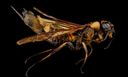
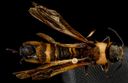
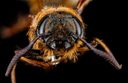
Eriotremex formosanus is an Asian horntail ( Siricidae) native to Asia that has been introduced and established in the southeastern United States. Unlike most siricid wasps, which specialize on conifers, this exhibits unusually broad associations, utilizing both coniferous and hardwood tree species. Females possess a long ovipositor for drilling into wood and deposit along with fungal (Amylostereum areolatum) that larvae feed upon during development. The species targets stressed, dying, or recently dead trees rather than healthy timber.
Pronunciation
How to pronounce Eriotremex formosanus: //ˌɛri.oʊˈtrɛmɛks ˌfɔrmoʊˈsɑːnəs//
These audio files are automatically generated. While they are not always 100% accurate, they are a good starting point.
Identification
Distinguished from native North American siricids by its Asian origin and exceptionally broad range spanning both conifers and hardwoods. Females have a prominent, elongated ovipositor for wood-drilling. Can be separated from the congeneric Eriotremex hastatus by morphological features and geographic distribution. The combination of oviposition into hardwood and transport of Amylostereum areolatum distinguishes it from most other siricids in its introduced range.
Images
Habitat
Forested areas containing stressed, dying, or recently dead trees; larval development occurs entirely within the wood of trees. In its introduced North American range, has been documented in diverse forest types in South Carolina including pine forests, mixed hardwood stands, and riparian areas.
Distribution
Native to Asia (Taiwan, where first described, and broader Asian range); introduced and established in the southeastern United States, specifically documented in South Carolina with GBIF records indicating presence in the conterminous 48 United States.
Diet
Larvae feed exclusively on fungal (Amylostereum areolatum) cultivated in the wood of trees; do not feed.
Host Associations
- Pinus taeda - loblolly pine
- Pinus echinata - shortleaf pine
- Pinus palustris - longleaf pine
- Pinus strobus - eastern white pine
- Picea rubens - red spruce
- Tsuga canadensis - eastern hemlock
- Liquidambar styraciflua - sweetgum
- Liriodendron tulipifera - tulip poplar
- Acer rubrum - red maple
- Quercus spp. - oak
- Carya spp. - hickory
- Nyssa sylvatica - black tupelo
- Ulmus spp. - elm
- Celtis laevigata - sugarberry/hackberry
- Salix nigra - black willow
- Alnus serrulata - smooth alder
- Betula nigra - river birch
- Fagus grandifolia - American beech
- Cercis canadensis - eastern redbud
- Cornus florida - flowering dogwood
- Sassafras albidum - sassafras
- Sambucus nigra - elderberry
- Robinia pseudoacacia - black locust
- Gleditsia triacanthos - honey locust
- Juniperus virginiana - eastern red cedar
- Chamaecyparis thyoides - Atlantic white cedar
- Taxodium distichum - bald cypress
- Magnolia grandiflora - southern magnolia
- Magnolia virginiana - sweetbay magnolia
- Laurus nobilis - bay laurel
- Persea borbonia - redbay
- Ilex opaca - American holly
- Ilex vomitoria - yaupon
- Myrica cerifera - wax myrtle
- Morella rubra - red bayberry
- Rhus copallinum - winged sumac
- Rhus typhina - staghorn sumac
- Toxicodendron radicans - eastern poison ivy
- Vitis rotundifolia - muscadine grape
- Smilax spp. - greenbrier
- Lonicera japonica - Japanese honeysuckle
- Pueraria montana var. lobata - kudzu
Life Cycle
Females use their elongated ovipositor to drill into wood of trees and deposit along with fungal Amylostereum areolatum carried in specialized intersegmental pouches. Eggs hatch into larvae that tunnel through wood, feeding on the cultivated fungal symbionts. Larvae develop through multiple instars over an extended period. occurs within the wood, and emerge through exit holes. Males likely emerge before females, though specific timing has not been documented.
Behavior
Females exhibit strong preference for stressed, dying, or recently dead trees rather than healthy trees, a that facilitates detection and of suitable . Oviposition involves drilling into wood with the ovipositor and inoculating the tunnel with fungal . The demonstrates unusual behavioral plasticity in host selection, utilizing both coniferous and hardwood species—a breadth uncommon among siricid .
Ecological Role
Wood-boring insect contributing to decomposition of dead and dying trees in forest . Acts as a for the fungal Amylostereum areolatum, facilitating its spread into new wood substrates. May accelerate wood degradation and nutrient cycling in forests. In its introduced range, represents a potential pest of stressed timber resources and may compete with native wood-boring insects for .
Human Relevance
Potential pest of stressed or damaged timber resources in its introduced North American range. The broad range including commercially valuable hardwood and conifer raises concerns for forestry operations. No direct economic damage estimates have been published, but its establishment in the southeastern United States represents a novel forest health concern.
Similar Taxa
- Eriotremex hastatusCongeneric ; distinguished by morphological features and geographic distribution
- Urocerus spp.Native North American siricids that specialize on conifers and do not exhibit the broad hardwood range of E. formosanus
- Sirex spp.Native North American siricids with more restricted associations, primarily conifer
Sources and further reading
- BugGuide
- GBIF taxonomy match
- iNaturalist taxon
- NCBI Taxonomy
- What lies beneath the mulch? Formosan termite, Coptotermes formosanus, and Eastern subterranean termite, Reticulitermes flavipes — Bug of the Week
- More Than a Pest: Termites as Models for Evolutionary Transitions
- For Termites, Home is Where the Molt Is
- Bait-Stricken Termites Still Heed Call to Molt in Their Central Nest
- A Termite-Control Twofer: How Baiting One Colony of Formosan Subterranean Termites Can Knock Out the Colony Next Door
- In Subterranean Termite Colonies, Older Workers Change the Diapers
- Host-use Patterns ofEriotremex formosanus(Hymenoptera: Siricidae) in South Carolina, U.S.A.