
Eriotremex
Benson, 1943
Species Guides
1- Eriotremex formosanus(Asian Horntail)
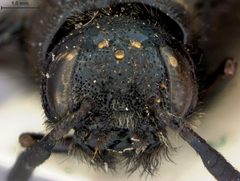
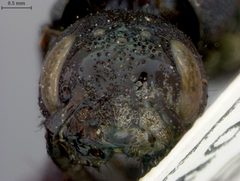
Eriotremex is a of woodwasps in the Siricidae (Hymenoptera). Members of this genus are associated with coniferous and are distributed in Asia and North America. At least one , Eriotremex formosanus, has been introduced to the southeastern United States, where it has been documented in South Carolina. The genus is characterized by morphological features typical of Siricidae, including a cylindrical body and an elongated ovipositor in females.

Pronunciation
How to pronounce Eriotremex: //ˌɛri.oʊˈtrɛməks//
These audio files are automatically generated. While they are not always 100% accurate, they are a good starting point.
Identification
Eriotremex can be distinguished from other Siricidae by features of the and ovipositor structure, though specific diagnostic characters require examination of . The genus is most readily separated from the related genus Sirex by differences in antennal segmentation and the structure of the cornus (the spine-like projection at the tip). Accurate identification to species level often requires microscopic examination of morphological details.
Images
Habitat
Forested environments with coniferous trees; are associated with pine and other conifer .
Distribution
Native to Asia; at least one (Eriotremex formosanus) has been introduced to the southeastern United States, with confirmed presence in South Carolina.
Diet
Larvae feed on wood of coniferous trees; do not feed.
Host Associations
- Pinus - larval Eriotremex formosanus documented using pine in South Carolina
Life Cycle
Woodwasp involves -laying into wood using a long ovipositor; larvae develop within the wood, feeding on fungal and wood tissue; development spans one to multiple years depending on and conditions.
Behavior
Females drill into wood to oviposit, introducing fungal that help degrade wood for larval consumption. are relatively poor fliers and are often found near their trees.
Ecological Role
Decomposer of dead and dying conifer wood; contributes to nutrient cycling in forest . May accelerate decline of stressed trees.
Human Relevance
Eriotremex formosanus is considered an in the southeastern United States, where it may impact pine forestry and interact with native woodwasp . The has potential economic significance in timber-producing regions.
Similar Taxa
More Details
Invasive status
Eriotremex formosanus represents one of few siricid documented as established outside its native range, with confirmed in South Carolina as of the studied period.