
Colpa alcione
Banks, 1917
halcyon scoliid wasp
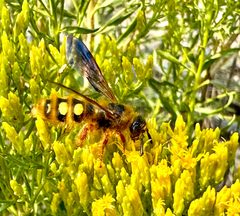
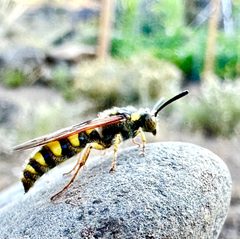
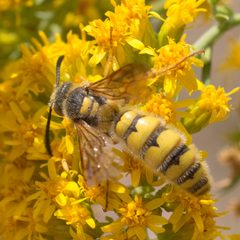
Colpa alcione, commonly known as the halcyon scoliid , is a of large-bodied scoliid wasp native to western North America. It belongs to the Colpa, which has been identified as sister to the tribe Scoliini based on recent phylogenetic studies using ultraconserved element data. As with other scoliid wasps, its larvae are of scarabaeid . The species has been documented in the southwestern United States and Baja California, Mexico.
Pronunciation
How to pronounce Colpa alcione: /ˈkɔlpə ælˈsi.oʊni/
These audio files are automatically generated. While they are not always 100% accurate, they are a good starting point.
Identification
Colpa alcione can be distinguished from other western North American scoliid wasps by its placement in the Colpa, which is characterized by morphological traits that separate it from the closely related Scoliini. Specific diagnostic features for C. alcione versus other Colpa require examination of detailed morphological characters. The genus Colpa as a whole can be separated from Campsomeris and related genera by genitalic and wing venation characters, though precise field identification to species level is challenging without expert examination.
Images
Distribution
Western North America. United States: documented in the southwestern region (Arizona, California, and adjacent states). Mexico: Baja California.
Diet
are known to feed on nectar. Larvae are of scarabaeid , though the specific scarab for C. alcione have not been documented.
Life Cycle
As a scoliid , Colpa alcione has a : females lay on or near scarabaeid in soil, and the wasp larva consumes the grub before pupating. Specific details of its developmental timing and number of per year have not been published.
Behavior
have been observed visiting flowers for nectar. Females are solitary and hunt for scarabaeid in soil to serve as for their offspring.
Ecological Role
As a of scarabaeid , Colpa alcione contributes to natural of scarab . Scarab larvae can be agricultural and horticultural pests, damaging plant roots in soil.
Human Relevance
Scoliid wasps including Colpa are generally not aggressive toward humans and are considered beneficial insects due to their role in controlling scarab beetle . They do not defend nests and stings are rare, typically occurring only if a female is handled directly.
Similar Taxa
- Scolia spp.Overlaps in distribution and general appearance; Scolia are in the sister tribe Scoliini and share large body size and black-and-white or black-and-yellow coloration patterns. Colpa can be distinguished by genitalic characters and subtle differences in wing venation.
- Campsomeris spp.Formerly grouped with Colpa in Campsomerini; Campsomeris are now placed in Campsomerini sensu stricto following phylogenetic revision. These differ in morphological details of the male genitalia and wing structure.
More Details
Taxonomic History
The Colpa was historically placed in the tribe Campsomerini, but phylogenetic analysis by Khouri et al. (2022) demonstrated that Colpa is sister to Scoliini, rendering Campsomerini non-monophyletic. This finding indicates that higher-level of Scoliidae requires substantial revision.
Research Significance
Colpa alcione is among the contributing to the modern systematic treatment of Scoliidae led by Ziad Khouri at UC Davis, representing the first - phylogenetic study of this . This research used ultraconserved element sequencing to resolve relationships previously obscured by morphological convergence.