
Helorus anomalipes
Panzer, 1798
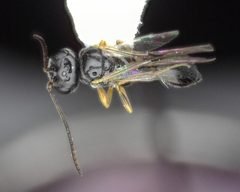
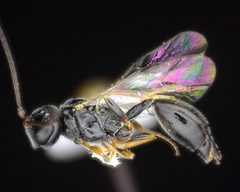
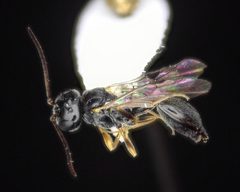
Helorus anomalipes is a rarely collected endoparasitoid in the Heloridae. It is one of the most readily distinguishable in its , characterized by a robust, sub-basally swollen petiole and smooth and mesosoma lacking pronounced coarse reticulation. The species parasitizes larvae of green lacewings (Chrysopidae, Neuroptera), with emerging from cocoons after pupating within.
Pronunciation
How to pronounce Helorus anomalipes: /hɛˈlɔːrəs əˌnɒməˈlaɪpiːz/
These audio files are automatically generated. While they are not always 100% accurate, they are a good starting point.
Identification
Distinguished from other Helorus by the combination of a comparatively robust, sub-basally swollen petiole and the absence of pronounced coarse reticulation on the and mesosoma. shows 0.2% maximum intraspecific distance and 12.3% minimum distance to the closest species, H. striolatus.
Images
Habitat
Forest (coded MF1, MF2, MF3 in source material). Recorded from elevations of 244–261 m in the Rheingau-Taunus region of Germany.
Distribution
Germany (Hesse: Rheingau-Taunus; Thuringia), Belgium, Denmark, Norway, Sweden, Türkiye (Ankara, Central Anatolia).
Host Associations
- Chrysopidae larvae (Neuroptera) - endoparasitoid killed after larva spins cocoon; emerges from host cocoon after pupating within
- Chrysopa species (Chrysopinae) - endoparasitoid
Life Cycle
Endoparasitoid development: larva develops inside , kills host after spinning its own cocoon, pupates within host cocoon, and emerges from host cocoon.
Ecological Role
Endoparasitoid of chrysopid larvae, contributing to of these predatory insects.
Similar Taxa
- Helorus striolatusClosest based on barcode divergence (12.3% minimum distance); distinguished by morphological differences in petiole structure and body sculpturing
- Helorus coruscusEuropean ; distinguished by morphological characters detailed in updated identification keys
- Helorus nigripesEuropean ; distinguished by morphological characters detailed in updated identification keys
- Helorus ruficornisEuropean ; distinguished by morphological characters detailed in updated identification keys
More Details
Taxonomic history
treatments in Townes (1977) and Van Achterberg (2006) remain complete and valid. The species was included in a 2024 integrative taxonomic revision combining and , with three specimens barcoded showing consistent intraspecific divergence.