
Anoplius americanus ambiguus
(Dahlbom, 1845)
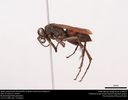
Anoplius americanus ambiguus is a of spider wasp in the Pompilidae. As a member of the Anoplius, it belongs to a diverse group of solitary that prey primarily on spiders. The subspecies was described by Dahlbom in 1845. Like other Anoplius , it likely exhibits the characteristic of digging burrows, paralyzing spider prey, and provisioning nests for larval development.
Pronunciation
How to pronounce Anoplius americanus ambiguus: /əˈnoʊpliəs əˌmɛrɪˈkeɪnəs æmˈbɪɡjuəs/
These audio files are automatically generated. While they are not always 100% accurate, they are a good starting point.
Identification
This requires microscopic examination for reliable identification, as is typical for most Anoplius . Anoplius americanus ambiguus is distinguished from other Anoplius through subtle morphological features, particularly in wing venation and genitalia structure. Field identification to subspecies level is generally not possible.
Images
Host Associations
- Lycosidae - preyWolf spiders are the primary prey for most Anoplius , though specific records for this are not documented.
Similar Taxa
- Anoplius americanus americanusThe nominate ; separated by geographic distribution and subtle morphological differences requiring examination of .
- Anoplius aethiopsSimilar large black spider wasp, but A. aethiops has different wing reflections and preferences; requires microscopic examination to separate reliably.
- Anoplius cleoraExtremely similar that cannot be distinguished from A. aethiops without microscopic examination; likely overlaps in general appearance with A. americanus ambiguus.
More Details
Taxonomic Status
Anoplius americanus ambiguus is an accepted within the variable Anoplius americanus. The species Anoplius americanus as a whole requires taxonomic revision, and some authorities have considered subspecies within this complex to represent distinct species.
Identification Challenges
The Anoplius contains many that are difficult to distinguish, with most requiring examination of male genitalia or detailed wing venation patterns. Coloration alone is unreliable for identification.
Sources and further reading
- BugGuide
- GBIF taxonomy match
- iNaturalist taxon
- Catalogue of Life
- Congratulations, UC Davis Linnaean Games Team: National Champs! | Bug Squad
- Bug Eric: Wasp Wednesday: Anoplius aethiops
- Bug Eric: Wasp Wednesday: Anoplius
- Oklahoma is More than OK for Burying Beetles
- Bug Eric: A Couple of Weirdos
- Emerald Ash Borer Infestation of White Fringetree Found to be Widespread