
Ageniellini
Mud-nesting Spider Wasps
Genus Guides
3- Ageniella(mud-nesting spider wasps)
- Auplopus(spider wasps)
- Phanagenia
Ageniellini is a tribe of spider wasps ( Pepsinae) comprising 17 . Members are commonly known as mud-nesting spider wasps due to their frequent construction of thimble-shaped mud nests, often communally. The tribe exhibits exceptional behavioral diversity, with three distinct nesting strategies: mud nest construction, dry soil excavation, and kleptoparasitic nest usurpation. These strategies have evolved independently multiple times from nest-constructing ancestors. Like all Pompilidae, females provision nests with paralyzed spiders as larval food, with most Ageniellini characteristically removing spider legs before transport.
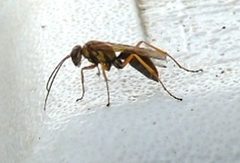
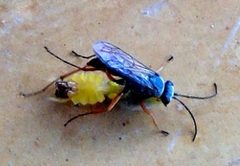
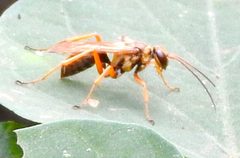
Pronunciation
How to pronounce Ageniellini: //ˌædʒɪniˈɛlaɪniː//
These audio files are automatically generated. While they are not always 100% accurate, they are a good starting point.
Identification
Separated from most Pompilidae by and absence of transverse carina on first gastral segment. Distinguished from Melanagenia (Pepsini) by presence of malar space, shallow (not deep) lateral of pronotum, and wing venation patterns. Leg amputation of spider prey, while common in Ageniellini, is not diagnostic alone as it occurs rarely in other groups.
Images
Appearance
Slender-bodied spider wasps with abdominal structure. Distinguished from most other Pompilidae by the typical absence of a transverse carina on the first segment of the . Share petiolate structure with Melanagenia (tribe Pepsini) but differ in having malar space present, shallow lateral of the pronotum, and distinct wing venation. Leg varies with nesting strategy: possess well-developed unguis and plantar bristles for digging, while cleptoparasitic species show reduced unguis and lack plantar bristles.
Habitat
Nests constructed in varied substrates: pre-existing cavities in soil or rotten wood, self-excavated burrows in dry soil, or self-constructed mud nests. Communal mud nests frequently attached to vegetation, rocks, or artificial structures.
Distribution
.
Diet
feed on nectar. Larvae are exclusively provisioned with paralyzed spiders (Araneae).
Host Associations
Life Cycle
Complete . Females construct or usurp nests, provision with single or multiple paralyzed spiders depending on strategy, and lay one per . involves multiple spider deliveries to developing larva with final nest closure; involves single spider provision with immediate closure. Development occurs within constructed, excavated, or usurped nests.
Behavior
Three primary nesting strategies: (1) construction of thimble-shaped mud nests, frequently communal; (2) excavation of nests in dry soil; (3) kleptoparasitic usurpation of other pompilid nests. Nest usurpation has evolved independently at least 6 times; cleptoparasitism at least 3 times. Most amputate spider legs before transport to nest—a rarely seen outside this tribe. Nest construction in pre-existing cavities may involve progressive or strategies.
Ecological Role
and of spiders, contributing to spider . Cleptoparasitic exploit nest resources of other pompilid wasps. may function as through nectar feeding.
Human Relevance
Communal mud nests occasionally attached to human structures. Not known to sting humans aggressively; beneficial as agents of spiders.
Similar Taxa
- PepsiniShares abdominal structure; distinguished by deep lateral of pronotum, lack of malar space, and different wing venation
- Other PompilidaeMost have transverse carina on first gastral segment and non- ; lack the characteristic leg amputation common in Ageniellini
More Details
Phylogenetic insights
Phylogenetic analysis indicates nest construction is the ancestral condition for Ageniellini, with behavioral shifts to nest usurpation and cleptoparasitism representing multiple independent evolutionary events rather than single origins.
Morphological adaptations
Leg structure correlates with nesting strategy: digging possess adaptations (well-developed unguis, plantar bristles), while cleptoparasitic species show reduced digging structures, reflecting relaxed selection for excavation ability.