
Ceropales robinsonii
Cresson, 1867
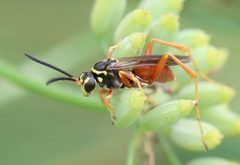
Ceropales robinsonii is a of spider wasp in the Pompilidae. The Ceropales comprises kleptoparasitic spider wasps that do not hunt spiders themselves, but instead lay in the nests of other spider wasps. This species was described by Cresson in 1867. Very little specific information is documented about C. robinsonii, though the genus is known for its distinctive coloration and parasitic lifestyle.
Pronunciation
How to pronounce Ceropales robinsonii: /ˈsɛrəpæliːz ˌrɒbɪnˈsɒniːaɪ/
These audio files are automatically generated. While they are not always 100% accurate, they are a good starting point.
Identification
Members of the Ceropales can be distinguished from the ichneumon Ceratogastra ornata, which they resemble, by their longer, fewer antennal segments. Spider wasps in this genus typically exhibit yellow and reddish-brown or black color patterns. Specific diagnostic features for C. robinsonii are not documented in available sources.
Images
Host Associations
- Other spider wasps (Pompilidae) - kleptoparasiteCeropales lay in the nests of other spider wasps that have provisioned with paralyzed spiders
Behavior
Ceropales are kleptoparasitic. Females enter the burrows of other spider wasps and deposit on spiders that the has paralyzed and stored. The Ceropales larva consumes the spider, killing the host's offspring.
Ecological Role
As kleptoparasites, Ceropales function as secondary consumers that exploit the hunting efforts of primary spider wasp . This parasitic relationship reduces the reproductive success of .
Similar Taxa
- Ceratogastra ornataSimilar yellow and reddish-brown/black coloration; distinguished by longer, fewer antennal segments in Ceropales versus many short segments in ichneumon wasps
- Poecilopompilus speciesSimilar color pattern; spider wasps in this are slightly larger and are the primary hunters that Ceropales exploits
More Details
Taxonomic status note
Catalogue of Life lists Ceropales robinsonii as a synonym, while GBIF treats it as accepted. This discrepancy reflects ongoing taxonomic evaluation.