
Sphaeropthalma imperialis
(Blake, 1871)
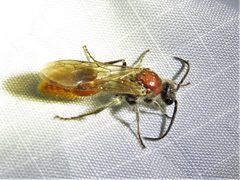
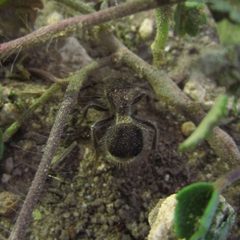
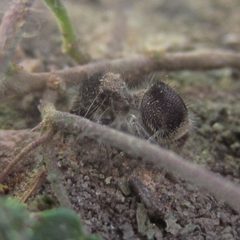
Sphaeropthalma imperialis is a of velvet ant ( Mutillidae), a group of solitary known for their aposematic coloration and potent sting. Females are wingless and resemble large, hairy ants, while males possess wings. The species was described by Blake in 1871. Like other mutillids, this species exhibits and is in its . The Sphaeropthalma is diverse and primarily distributed in the Americas.
Pronunciation
How to pronounce Sphaeropthalma imperialis: /sfɛˌroʊpˈθælmə ˌɪmpɪˈreɪliəs/
These audio files are automatically generated. While they are not always 100% accurate, they are a good starting point.
Identification
Sphaeropthalma imperialis can be distinguished from other Sphaeropthalma by specific color patterns and structural features, though precise diagnostic characters require examination of . Females are wingless with dense, velvety typical of the . Males have wings and differ in body proportions. Separation from similar species such as Sphaeropthalma arvak and Sphaeropthalma rataosk requires detailed morphological analysis of setal patterns, integumental sculpturing, and genitalic structures.
Images
Distribution
Sphaeropthalma imperialis occurs in North America. Specific locality data is sparse in available sources, but the is broadly distributed across western and southwestern United States and Mexico.
Ecological Role
As a member of Mutillidae, Sphaeropthalma imperialis likely functions as a of other insects, though specific records are not documented in available sources. Velvet ants parasitize the stages of various insects, particularly ground-nesting bees and .
Human Relevance
Females possess a powerful sting, earning velvet ants the nickname 'cow killers,' though this is exaggerated. Direct encounters with humans are uncommon due to their solitary nature. The has no documented economic importance.
Similar Taxa
- Sphaeropthalma arvakSimilar size range and geographic distribution; distinguished by subtle differences in color pattern and female pilosity
- Sphaeropthalma rataoskOverlapping distribution; requires examination of antennal structure and male genitalia for definitive separation
- Other Mutillidae generaVelvet ants in such as Dasymutilla and Pseudomethoca share aposematic coloration and wingless females, but differ in body form, setal patterns, and structural details of the mesosoma and metasoma