Timulla ferrugata
velvet ant
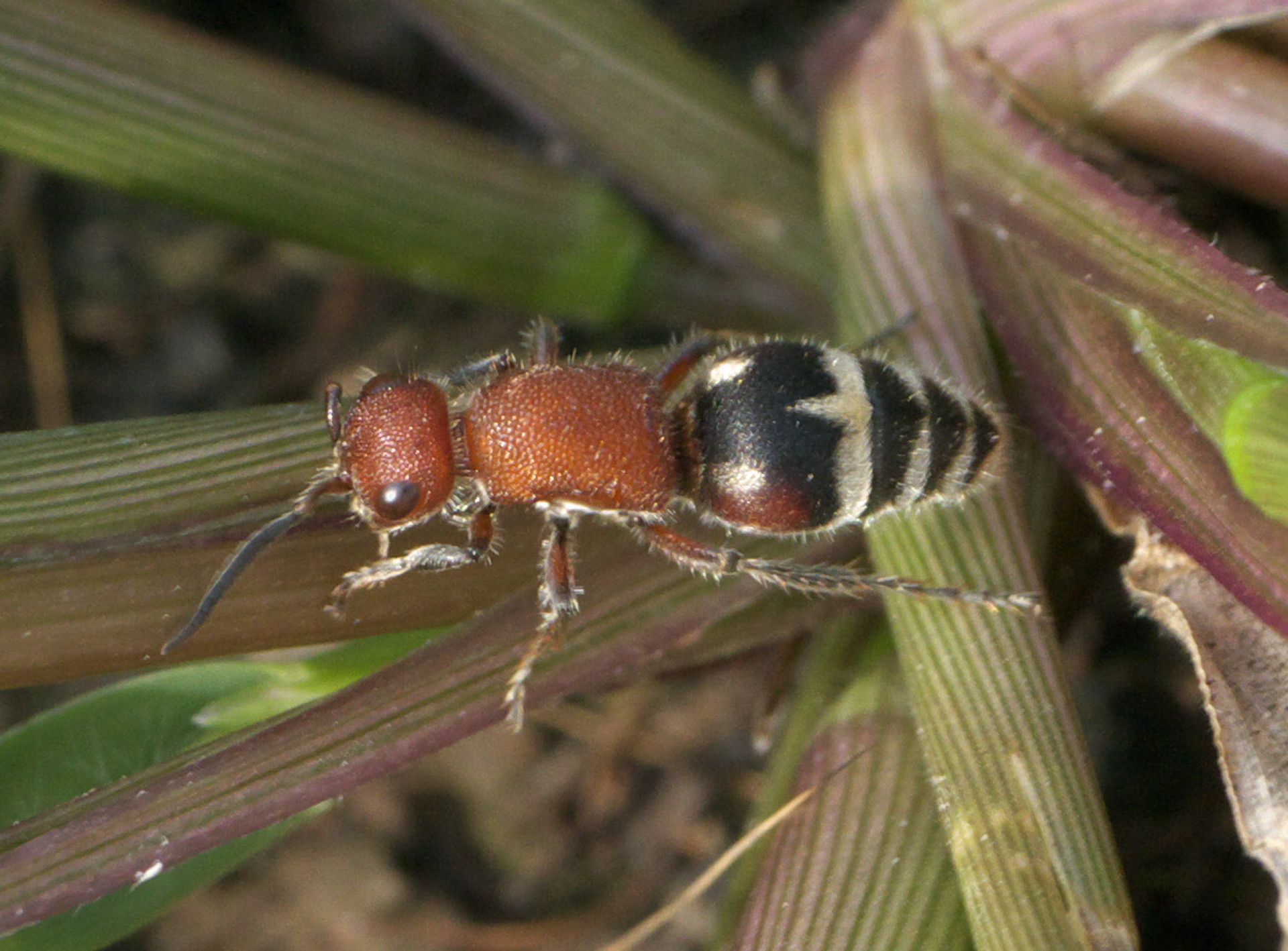
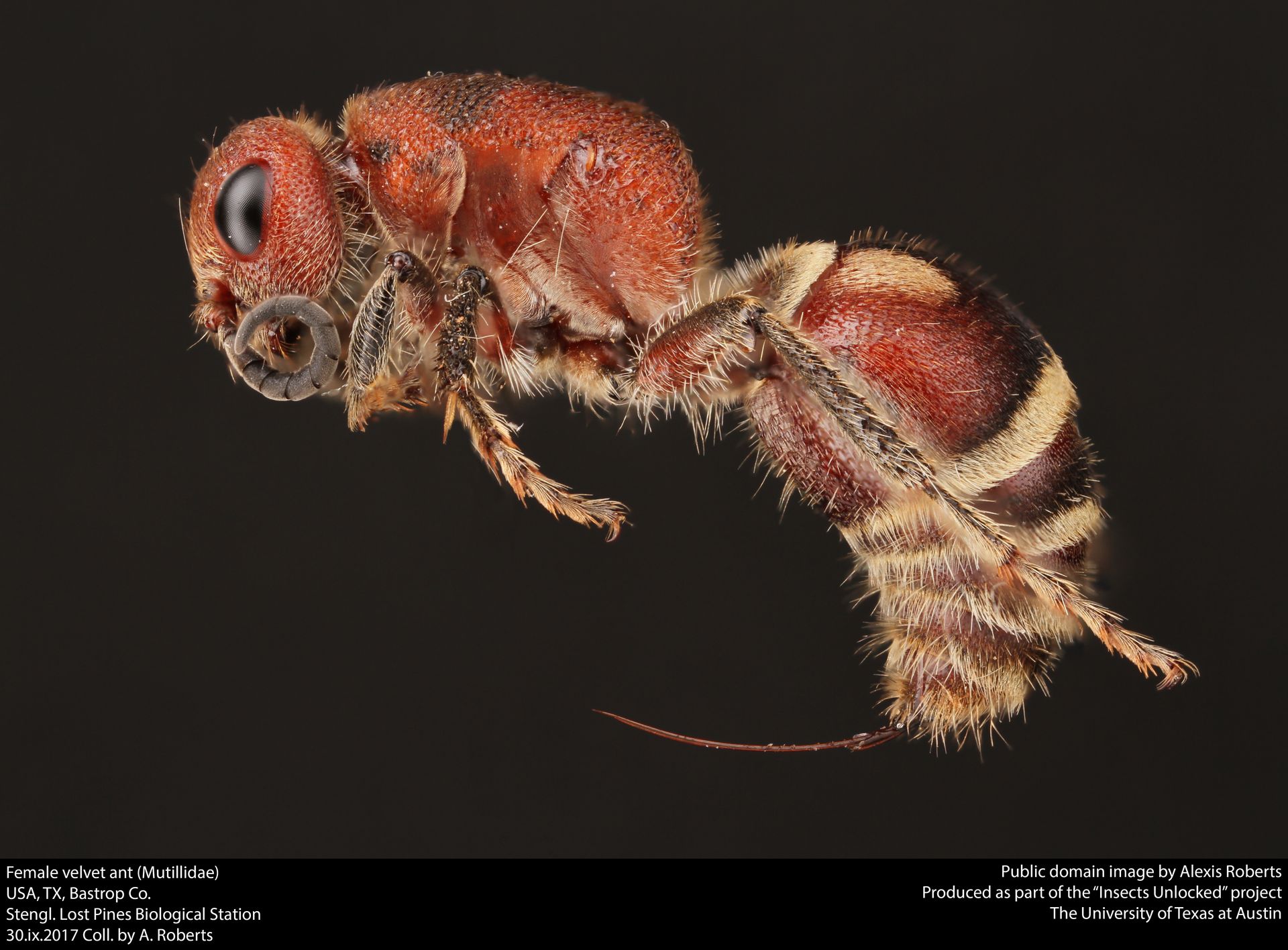
Timulla ferrugata is a of velvet ant in the Mutillidae, found in the southeastern United States. Females are wingless and -like in appearance, while males possess wings. The species is known for its aposematic orange and brown coloration. Despite their , velvet ants are actually solitary wasps, not ants.
Pronunciation
How to pronounce Timulla ferrugata: //tɪˈmʌlə ˌfɛrʊˈɡɑːtə//
These audio files are automatically generated. While they are not always 100% accurate, they are a good starting point.
Identification
The combination of wingless female, bright orange body with contrasting brown terminal segments, and dense velvety distinguishes this from true ants (Formicidae), which have elbowed and a constricted petiole with one or two nodes. The color pattern separates it from other Timulla species with different pigmentation. Males may be confused with other but possess the characteristic antennal structure of Mutillidae.
Images
Appearance
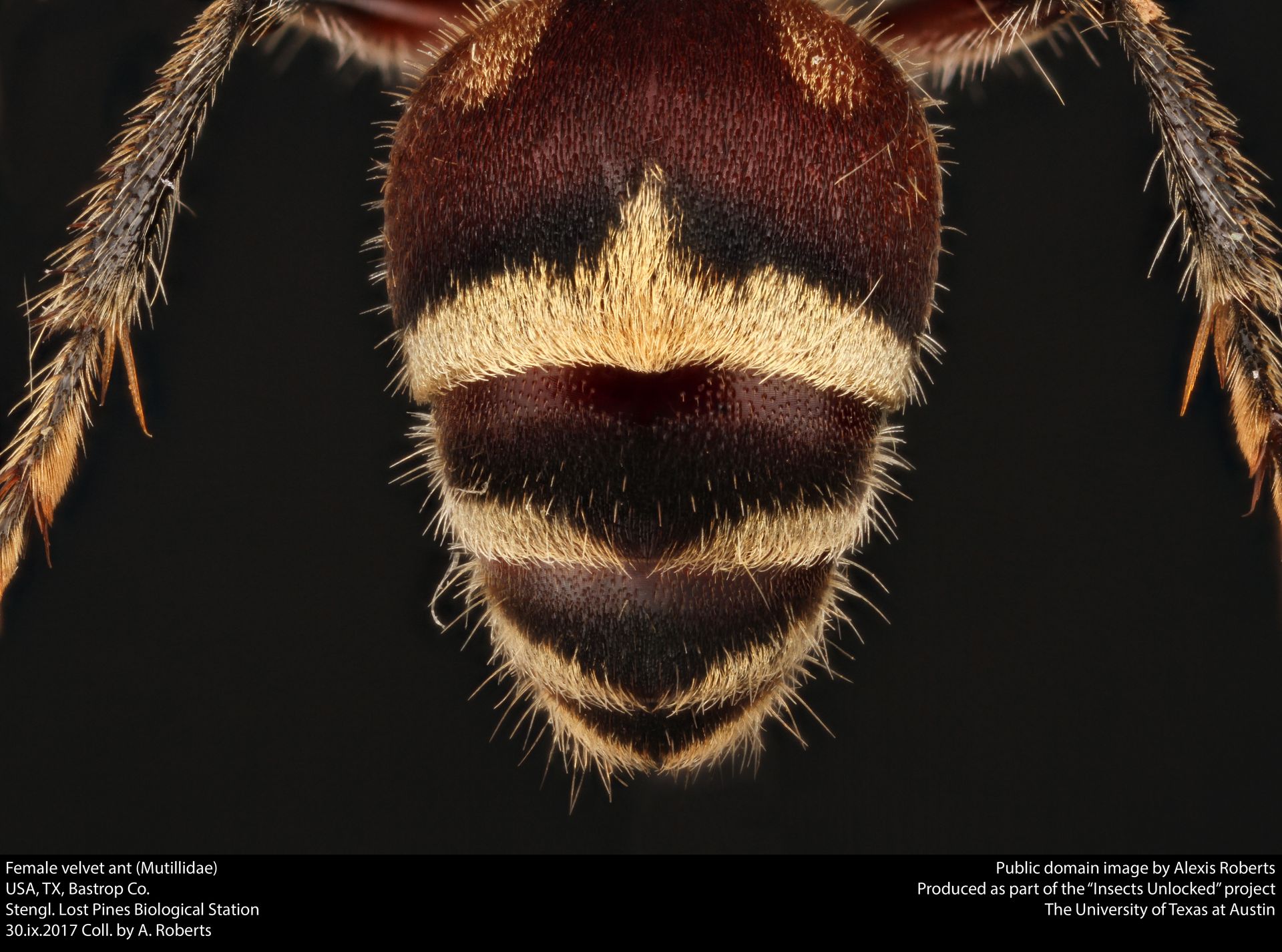
Body predominantly orange with brown to dark orange coloration on the (beak) and terminal abdominal segments (rear). Females are wingless; males have wings. Body length ranges from 5 to 10 mm, with females larger than males. The dense, velvety setae characteristic of Mutillidae covers the body.
Habitat
Occurs in sun-dappled patches on deciduous forest floors. Associated with open, sunlit areas within wooded environments.
Distribution
Southeastern United States. Specific state records require verification.
Behavior
Solitary. Females are often observed on the ground, sometimes in open areas. The has been reported walking in groups of up to 100 individuals or more, though this requires confirmation for this specific species.
Ecological Role
Females are ectoparasitoids of ground-nesting bees and . The aposematic coloration suggests a defensive role in Müllerian mimicry complexes with other stinging Hymenoptera.
Human Relevance
Females possess a potent sting and should be handled with caution. The serves as a model for mimicry by the ground spider Sergiolus capulatus, which resembles Timulla species in coloration and use.
Similar Taxa
- Sergiolus capulatusA ground spider that closely mimics Timulla velvet ants in coloration and occupies similar sun-dappled forest floor ; distinguished by eight legs, , and lack of a constricted waist
- Other Timulla speciesSimilar body form and velvety texture; distinguished by specific color pattern of orange body with brown and rear segments
Misconceptions
Despite the 'velvet ant,' this is a (Hymenoptera), not an (Formicidae). The Wikipedia source contains unverified claims about diet (fruits, small mammals) and social that are inconsistent with known Mutillidae ; these have been excluded as unreliable.
More Details
Mimicry complex
Sergiolus capulatus (Gnaphosidae) bears an uncanny resemblance to Timulla velvet ants, including T. ferrugata, and frequents similar . This represents a likely case of , with the harmless spider gaining protection from the 's aposematic signal.