
Calotelea
Westwood, 1837
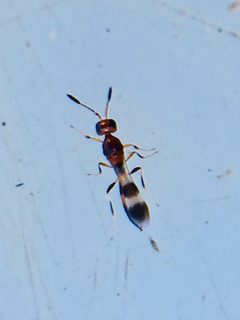
Calotelea is a of in the Scelionidae, first described by Westwood in 1837. Members of this genus are part of the diverse platygastroid wasp fauna, which are primarily parasitoids of insects and other arthropods. The genus is represented by only a handful of observations on iNaturalist, suggesting it is either genuinely rare, undercollected, or restricted to specific . As with other scelionids, in this genus likely play important roles in regulating of their through .
Pronunciation
How to pronounce Calotelea: /ˌkæləˈtiːliə/
These audio files are automatically generated. While they are not always 100% accurate, they are a good starting point.
Identification
Identification to requires examination of morphological characters typical of Scelionidae, including reduced wing venation with characteristic branching patterns, a laterally compressed metasoma, and specific antennal segment proportions. Within Scelioninae, Calotelea can be distinguished from related genera by genitalic and external structural features, though precise diagnostic characters require taxonomic knowledge. Specimens are small, typically under 5 mm, with the compact body form common to platygastroid .
Images
Distribution
Documented from Parque Nacional Natural Serranía de Chiribiquete in Colombia. The likely has a broader Neotropical distribution given the biogeographic patterns of related scelionid genera, but specific range boundaries remain poorly documented.
Ecological Role
As members of Scelionidae, in this function as , contributing to the of . This parasitoid lifestyle is characteristic of the and represents an important trophic link in .
Similar Taxa
- TelenomusBoth are scelionine with similar overall body plans and reduced wing venation; Calotelea can be distinguished by differences in antennal structure and genitalic .
- ScelioAnother scelionine with superficially similar appearance; Calotelea differs in specific features of the mesosoma and metasomal structure.
More Details
Taxonomic history
Calotelea was established by John Obadiah Westwood in 1837, making it one of the earlier described in Scelionidae. The genus has undergone taxonomic revision, though modern phylogenetic studies of Scelionidae continue to refine generic boundaries within the Scelioninae.
Data deficiency
Only 7 observations recorded on iNaturalist as of source date, indicating substantial knowledge gaps regarding , distribution, and of this .