
Coelioxys banksi
Crawford, 1914
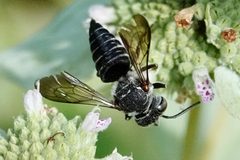
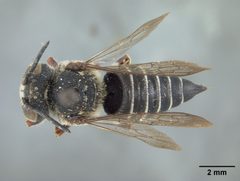
Coelioxys banksi is a of cuckoo bee in the Megachilidae, first described by Crawford in 1914. As a member of the Coelioxys, it is a kleptoparasite that exploits the nests of other bees. The species is known to parasitize nests of Megachile relativa, a leafcutter bee. Like other Coelioxys species, females possess a pointed adapted for inserting into nest .
Pronunciation
How to pronounce Coelioxys banksi: /ˌsiːliˈɒksɪs ˈbæŋksi/
These audio files are automatically generated. While they are not always 100% accurate, they are a good starting point.
Identification
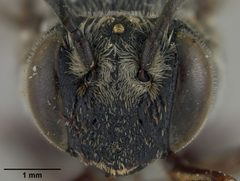
Coelioxys banksi can be distinguished from other Coelioxys by morphological features typical of the , including a pointed, conical in females used for -laying in nests. Males have modified terminal abdominal segments. Species-level identification within Coelioxys requires examination of subtle structural characters including details of the , clypeal margin, and genitalia. Separation from similar cuckoo bee genera such as Stelis is based on differences in abdominal shape and wing venation.
Images
Distribution
North America
Host Associations
- Megachile relativa - kleptoparasiteC. banksi is a of M. relativa nests
Behavior
Females enter nests during the host's absence and deposit on the pollen provisions. The cuckoo bee larva typically kills the host egg or larva and consumes the stored pollen and nectar.
Ecological Role
As a kleptoparasite, Coelioxys banksi functions as a regulator of its Megachile relativa. Cuckoo bees contribute to dynamics by exerting on host nesting and defensive strategies.
Similar Taxa
- Coelioxys sayiAnother North American Coelioxys with similar associations; requires detailed morphological examination for separation
- Coelioxys octodentataOverlapping distribution and similar cuckoo bee ; distinguished by abdominal and genitalic characters
- Stelis speciesSimilar kleptoparasitic megachilid bees with conical ; Stelis has different wing venation and abdominal structure
More Details
Taxonomic history
Described by R.L. Crawford in 1914, with the specific epithet honoring entomologist Nathan Banks
Sources and further reading
- BugGuide
- Wikipedia
- GBIF taxonomy match
- iNaturalist taxon
- Catalogue of Life
- Pensoft blog - Part 152
- Uncategorized | Blog - Part 46
- Bug Eric: Wasp Wednesday: Not Wasp VI
- Not-so Solitary Bees - Buglife Blog - Buglife
- Chrysobothris orono in Tennessee | Beetles In The Bush
- What's the Best Method to Monitor Wild Bees?