
Lithurgopsis
Fox, 1902
northern cactus woodborer bees
Species Guides
4- Lithurgopsis apicalis(orange-tipped woodborer)
- Lithurgopsis echinocacti(Barrel Cactus Woodborer)
- Lithurgopsis gibbosa(Southeastern Woodborer)
- Lithurgopsis littoralis
Lithurgopsis is a of solitary bees in the Megachilidae, Lithurginae. These bees are commonly referred to as "northern cactus woodborers" due to their specialized association with cactus wood for nesting. The genus contains at least nine described distributed across North America, with documented occurrences in the southwestern United States and Mexico. Species within this genus exhibit specialized nesting , excavating tunnels in cactus stems and provisioning with pollen and nectar.
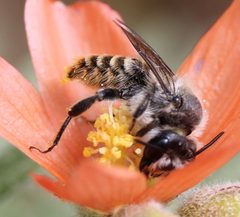
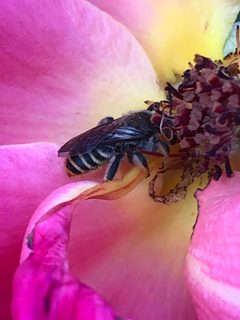
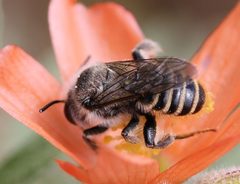
Pronunciation
How to pronounce Lithurgopsis: /lɪˈθɜrɡəpˌsɪs/
These audio files are automatically generated. While they are not always 100% accurate, they are a good starting point.
Identification
Lithurgopsis are distinguished from other megachilid bees by their association with cactus wood nesting substrates and their placement in the Lithurginae. Lithurgopsis apicalis, one of the better-known species, has distinctive orange-tipped abdominal segments that aid in field identification. The can be separated from the related genus Lithurgus by geographic distribution and associations.
Images
Habitat
Arid and semi-arid regions of North America, particularly areas supporting columnar and barrel cacti. include desert scrub, chaparral, and dry grasslands where cacti of the Opuntia, Echinocereus, and related occur.
Distribution
Southwestern United States (Texas, New Mexico, Arizona) and Mexico. Documented occurrences include the Davis Mountains of Texas, western Texas desert regions, and areas of New Mexico and Arizona where suitable cactus are present.
Seasonality
activity has been documented in late spring through early summer (May-June), coinciding with cactus flowering periods and favorable thermal conditions for nesting activity.
Diet
feed on nectar and pollen from diverse desert flora including cactus flowers (Opuntia engelmannii), Apache plum (Fallugia paradoxa), and other blooming plants in their arid range.
Host Associations
- Opuntia engelmannii - nesting substratecactus wood used for tunnel excavation
- Echinocereus enneacanthus - foraging resourceflowers visited for pollen and nectar collection
- Fallugia paradoxa - foraging resourceflowers visited for pollen and nectar collection
- cactus wood (general) - nesting substratedead or living cactus stems excavated for nest construction
Life Cycle
Solitary bees with typical megachilid development: females excavate tunnels in cactus wood, construct individual provisioned with pollen and nectar, lay , and seal cells. Larvae develop within cells, pupate, and emerge as . Multiple per year possible in favorable climates.
Behavior
Females excavate nesting tunnels in cactus stems using their , a that gives the group its of "cactus woodborers." Nests are provisioned with pollen and nectar collected from desert flowers. Males have been observed visiting flowers for nectar and may exhibit patrolling behavior in search of females.
Ecological Role
of desert flora including cacti and other flowering plants. Their specialized cactus-wood nesting creates microhabitats that may be subsequently used by other insects. As primary excavators of cactus stems, they contribute to nutrient cycling in arid .
Similar Taxa
- LithurgusRelated in Lithurginae, but distinguished by Old World distribution and different plant associations
- other MegachilidaeLithurgopsis is distinguished by -level characters and specialized cactus-wood nesting not typical of most megachilids