
Xorides albopictus
(Cresson, 1870)
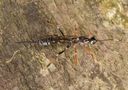
Xorides albopictus is a of ichneumon in the Ichneumonidae, first described by Cresson in 1870. It belongs to the Xorides, which comprises wasps that attack wood-boring beetles. The specific epithet 'albopictus' (Latin for 'white-painted') likely refers to distinctive pale markings on the body. As with other members of its genus, this species is presumed to be a parasitoid of cerambycid or buprestid larvae, though specific records for X. albopictus appear limited in published literature.
Pronunciation
How to pronounce Xorides albopictus: //ksɔˈɹaɪdiːz ˌælboʊˈpɪktəs//
These audio files are automatically generated. While they are not always 100% accurate, they are a good starting point.
Images
Distribution
Recorded from Vermont, United States. The appears to have a North American distribution, though precise range boundaries are not well documented. Distribution records are sparse, with observations documented through iNaturalist and GBIF.
Host Associations
- Cerambycidae - presumed larval Based on -level ; specific records for X. albopictus not confirmed
- Buprestidae - presumed larval Based on -level ; specific records for X. albopictus not confirmed
Ecological Role
As a member of the Xorides, this likely functions as a agent of wood-boring . Ichneumonid wasps in this genus are specialized that locate beetle larvae tunneling in wood and deposit on or near the .
More Details
Taxonomic note
The specific epithet 'albopictus' is shared with the Asian tiger mosquito (Aedes albopictus), but the two are unrelated. Xorides albopictus is a , while Aedes albopictus is a mosquito. The similar naming reflects independent descriptions using the same Latin descriptor for white markings.
Data limitations
Published biological information specific to Xorides albopictus is scarce. Most knowledge is inferred from -level studies of Xorides . The has been documented through citizen science platforms (iNaturalist: 70 observations) and biodiversity databases, but formal taxonomic revisions and records appear limited in accessible literature.
Sources and further reading
- BugGuide
- GBIF taxonomy match
- iNaturalist taxon
- Catalogue of Life
- Lisa Baik Seminar: Targeting Taste System of Deadly Mosquitoes | Bug Squad
- Three-Quarters of U.S. Has Suitable Climate for Aedes aegypti and Aedes albopictus Mosquitoes
- Neighborhood Watch: How Asian Tiger Mosquito Habitat Varies From Block to Block in an Urban Setting
- Controlling the Asian Tiger Mosquito, a Potential Zika Vector, is Possible but Difficult
- Satyrization is No Laughing Matter for Aedes Aegypti Mosquitoes, But Pickiness Has a Price
- CDC Releases New Data Showing Gaps Remain in Surveillance for Mosquitoes That Transmit Zika