
Odontocolon
Cushman, 1942
Species Guides
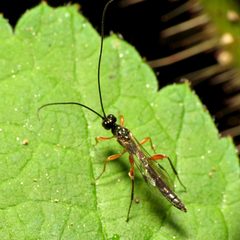
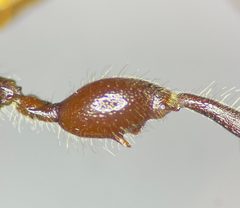
5Odontocolon is a of ichneumon wasps in the Xoridinae, containing at least 40 described . These are that target wood-boring larvae and larvae living in tree bark. Females possess elongated ovipositors used to drill through wood to reach their , while males lack this structure. The genus is distinguished by teeth on the hind and exhibits holarctic distribution patterns.
Pronunciation
How to pronounce Odontocolon: //oʊˈdɒntoʊˌkoʊlən//
These audio files are automatically generated. While they are not always 100% accurate, they are a good starting point.
Identification
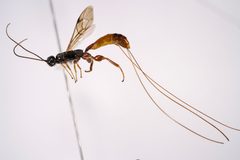
Distinguished from other ichneumonid by teeth on the hind . Within Xoridinae, separated from related genera by specific combinations of morphological characters including ovipositor length and femoral . The extremely long ovipositor in females, used for drilling into wood, is visually distinctive in the field. Males are more difficult to identify and require examination of hind femur structure.
Images
Appearance
Medium-sized ichneumon wasps with slender bodies. Females possess extremely long, thread-like ovipositors that extend well beyond the body length, often mistaken for stingers. Males lack this elongated ovipositor. A key diagnostic feature is the presence of teeth on the hind . Coloration varies by but generally includes combinations of black, brown, and reddish tones typical of ichneumonids.
Habitat
Forested environments, particularly areas with dead, dying, or recently cut trees. Associated with standing dead timber, stumps, and fallen logs where wood-boring larvae are present. Found in both deciduous and coniferous forest types depending on availability.
Distribution
Holarctic distribution spanning North America, Europe, and Asia. At least 23 occur north of Mexico in North America. Records from Scandinavia (Denmark, Norway, Sweden) and the northeastern United States (Vermont).
Seasonality
activity peaks in autumn (September-October in temperate regions), coinciding with the availability of mature larvae in dead and dying wood. Some may show spring patterns.
Host Associations
- wood-boring beetles - Cerambycidae (longhorned beetles) specifically mentioned as ; larvae are external on and pupae
- sawflies - Hymenoptera in wood-boring groups; each shows specific host preferences
Life Cycle
Females drill into wood using their ovipositor to deposit onto or near larvae living in inner bark. Eggs are laid on the exterior of living host larvae. Larvae hatch and develop as external , feeding on the host and eventually killing it. Mature larvae spin cocoons under bark. emerge the following spring after in the cocoon stage.
Behavior
Females actively search dead and dying wood, drilling with their ovipositor to locate concealed larvae. ignore exposed host larvae, suggesting selectivity for protected, viable hosts within wood. Not aggressive toward humans; the apparent 'stinger' is solely an ovipositor for -laying. Males do not drill and presumably search for females near host .
Ecological Role
agent of wood-boring beetles and . Regulates of forest pests that damage standing and fallen timber. Contributes to nutrient cycling in forest by affecting the of wood-decomposing insects.
Human Relevance
Beneficial insects for forestry; help control of wood-boring beetles that damage timber and ornamental trees. No negative impacts on humans; non-aggressive and unable to sting. Occasionally observed by entomologists and naturalists investigating dead wood fauna.
Similar Taxa
- MegarhyssaGiant ichneumons with extremely long ovipositors; distinguished by larger size, different relationships (horntail ), and lack of hind teeth
- Xoridinae (other genera)Three other in the same share habits on wood-borers; separated by specific morphological characters of the hind and ovipositor structure
More Details
Taxonomic status
One of four in the Xoridinae; genus established by Cushman in 1942
Species diversity
At least 40 described globally; 23 species documented north of Mexico