
Tryphonini
Genus Guides
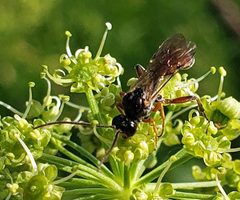
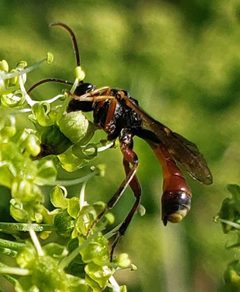
5Tryphonini is a tribe of koinobiont ichneumonid wasps within the Tryphoninae. Members are ectoparasitoids of larvae (Hymenoptera: ), with females possessing relatively large loads compared to idiobiont relatives. The Polyblastus is a well-documented member of this tribe. Females have been observed carrying egg clusters externally, possibly due to egg retention after unsuccessful oviposition attempts.
Pronunciation
How to pronounce Tryphonini: /trɪˈfoʊnɪnaɪ/
These audio files are automatically generated. While they are not always 100% accurate, they are a good starting point.
Identification
Tryphonini can be distinguished from other Tryphoninae tribes by koinobiont and association with . Members of the Polyblastus, placed in this tribe, may be recognizable by their relatively small size among ichneumonids and documented of external carriage. Detailed morphological diagnostic characters for the tribe require examination and are not reliably determined from images alone.
Images
Habitat
supporting of larvae, including deciduous and coniferous forests, riparian corridors, and open spaces with plants. The documented observation of Polyblastus occurred in a semi-urban open space with adjacent vegetation supporting elm sawflies (Cimbex americana).
Distribution
Documented from North America (Colorado, USA specifically recorded) and inferred to have broader distribution corresponding to ranges. Precise geographic limits of the tribe require further documentation.
Seasonality
activity coincides with availability of larval ; observed in early June in Colorado, suggesting spring to early summer in temperate regions.
Diet
Larval stage feeds on larvae (); diet not documented in available sources.
Host Associations
- Cimbex americana - larval Elm sawfly; for Polyblastus
Life Cycle
Koinobiont ectoparasitoid: deposited on or near larval ; larva attaches externally and feeds while host continues development; emerges from host cocoon after host pupates. Females carry larger egg loads than idiobiont relatives, with smaller individual eggs. External egg clusters observed in Polyblastus may represent retained eggs from unsuccessful oviposition attempts rather than deliberate oviposition on foliage.
Behavior
Females search for larval . Documented in Polyblastus: accumulation of multiple on the ovipositor/external , possibly retained after failed host location or oviposition attempts. This distinguishes them from typical ichneumonid egg deposition directly on or in hosts.
Ecological Role
agent regulating . As koinobiont , they exert -dependent pressure on specific sawfly rather than broad ranges.
Human Relevance
Potential value in forestry and agriculture for natural suppression of pests. No documented negative impacts; stings not reported in available sources.
Similar Taxa
- Idiobiont ichneumonidsDiffer in : idiobionts arrest development at , typically target pupae, have smaller loads, and are ; Tryphonini are koinobiont on larvae with larger egg loads
- Other Tryphoninae tribesShare characteristics but differ in associations and precise traits; morphological distinction requires expert examination
Misconceptions
External clusters on foliage were initially interpreted as deliberate oviposition ; subsequent expert consultation suggests these represent retained eggs from unsuccessful oviposition attempts rather than atypical oviposition strategy.
More Details
Life history trade-offs
Research on Ctenoplematinae (including Tryphonini) demonstrates phylogenetic constraints on load: koinobionts like Tryphonini carry significantly more eggs than idiobionts, but with smaller egg size, reflecting allocation trade-offs between egg number and egg size in (Cummins et al. 2011).
Taxonomic note
The Polyblastus, referenced in behavioral observations, is classified within Tryphonini according to BugGuide.net (Carlson 2010) and expert identification from the source observation.