
Polyblastus
Hartig, 1837
Species Guides
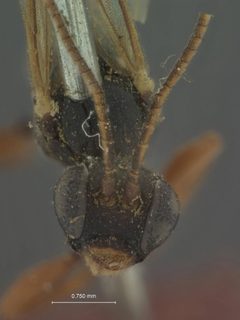
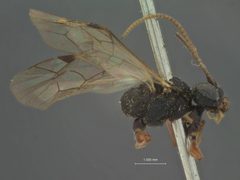
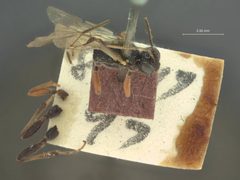
3Polyblastus is a of ichneumon wasps in the Tryphoninae. Females are koinobiont ectoparasitoids of larvae, carrying multiple small externally on the ovipositor or . The genus has been documented in Europe and North America, with field observations in northern Germany and Colorado, USA. Some have been observed with egg clusters attached to foliage, though the function of this remains unclear.
Pronunciation
How to pronounce Polyblastus: //ˌpɒliˈblæstʊs//
These audio files are automatically generated. While they are not always 100% accurate, they are a good starting point.
Identification
Polyblastus are small ichneumon wasps that can be difficult to distinguish from other Tryphoninae from images alone. Females may be recognized by the presence of multiple small visible externally on the or ovipositor, a trait associated with koinobiont . Definitive identification typically requires examination of morphological characters not visible in field photographs.
Images
Habitat
Associated with supporting . In North America, observed in open spaces with elm sawfly (Cimbex americana) presence. In Europe, documented in northern Germany (Schleswig-Holstein).
Distribution
Europe: documented in Denmark, Norway, Sweden, Germany (Schleswig-Holstein). North America: recorded in Colorado, USA. GBIF distribution records indicate presence in DK, NO, SE.
Host Associations
- sawfly larvae (Symphyta) - koinobiont ectoparasitoidLarval stage feeds externally on ; emerges from host cocoon
- Halidamia affinis - documented for P. tuberculatus in Germany
- Euura annulata - documented for P. tuberculatus in Germany
- Cimbex americana - probable elm sawfly present at same Colorado location where Polyblastus observed
Life Cycle
Koinobiont development: larva continues development after until larva completes its growth. Wasp larva is an external attached to the host. wasp emerges from the cocoon spun by the host sawfly larva.
Behavior
Females carry multiple small externally, either on the ovipositor or accumulated on the . One observed individual deposited eggs in a cluster on leaf undersides, though the adaptive significance of this is unresolved. Egg loads of koinobiont females are significantly larger than those of idiobiont ichneumons, though individual eggs are smaller.
Ecological Role
regulating . As a koinobiont ectoparasitoid, contributes to population control of sawflies while allowing host development to continue until parasitoid maturity.
Similar Taxa
- idiobiont ichneumon waspsPolyblastus is koinobiont, carrying larger loads of smaller eggs; idiobionts arrest development immediately and typically carry fewer, larger eggs
- other Tryphoninae generamost ichneumon cannot be distinguished from images alone; Polyblastus requires expert identification
Misconceptions
The observation of deposited on foliage rather than directly on a initially appeared to contradict the expected of ichneumon wasps. This has been interpreted as possible accumulation of eggs remaining after unsuccessful oviposition attempts, though the full explanation remains uncertain.
More Details
Egg load characteristics
According to Cummins et al. (2011), koinobionts including Polyblastus have significantly larger loads than idiobiont ichneumons, with smaller individual egg size. This may explain the visible external egg clusters observed in females.
Research challenges
The is taxonomically difficult, with most requiring expert examination for identification. The behavioral observation of deposition on foliage in Colorado (2016) generated international scientific discussion, highlighting how incidental field observations can reveal unresolved biological questions.