
Rhyssella nitida
(Cresson, 1864)
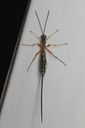
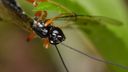
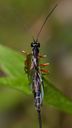
Rhyssella nitida is a ichneumon in the Ichneumonidae. The female possesses an exceptionally long ovipositor used to drill into wood and locate larvae. It is an external of wood-wasp larvae in the Xiphydria. The has been documented at blacklight traps, though this appears to be an exception to its normally diurnal activity pattern.
Pronunciation
How to pronounce Rhyssella nitida: /rɪˈsɛl.ə ˈnɪ.tɪ.də/
These audio files are automatically generated. While they are not always 100% accurate, they are a good starting point.
Identification
Images
Habitat
Forested areas with standing dead timber and logs containing wood- larvae. Associated with supporting Xiphydria wood-wasps.
Distribution
Recorded from North America, including Kansas and California. The specific range boundaries remain incompletely documented.
Seasonality
Observed in early spring; one record from March 31 in Kansas.
Host Associations
- Xiphydria - Female drills into logs and dead trees to reach wood- larvae; lays single on ; larva feeds as external , killing the host
Behavior
. Females use the long ovipositor to drill through wood to reach concealed larvae. Has been observed visiting blacklight traps, though this is atypical given its daytime activity pattern.
Ecological Role
agent of wood-. Functions as an external , regulating of Xiphydria larvae in dead and decaying wood.
Similar Taxa
- Ophion spp. ichneumonid wasps frequently captured at blacklights; distinguished by nocturnal activity and different associations
- Rhyssa spp.Larger relatives with similar wood-boring habits; differ in size and specific morphological features of the ovipositor and body
- Xiphydria spp.Wood- that serve as ; are the prey, not the , and have different body form and
Sources and further reading
- BugGuide
- Wikipedia
- GBIF taxonomy match
- iNaturalist taxon
- NCBI Taxonomy
- Catalogue of Life
- Bug Eric: First Night of Blacklighting
- Bug Eric: April 2024
- Beetle or Bee? Green June Beetle, Cotinus nitida — Bug of the Week
- From the mailbag - large scary bees buzzing the backyard? Nah, Green June Beetles, Cotinus nitida — Bug of the Week
- From the mailbag – Who’s that large dead insect on the driveway? Green June Beetle Grub, Cotinis nitida — Bug of the Week
- Lawn zoomers: Green June Beetle, Cotinus nitida — Bug of the Week