
Rhyssella humida
(Say, 1835)
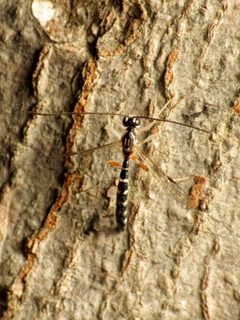
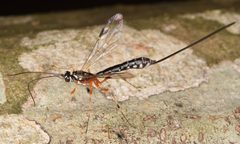
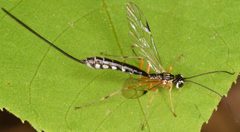
Rhyssella humida is a of ichneumon in the Ichneumonidae. Females possess an exceptionally long ovipositor used to drill into wood to reach larvae. The species is and has been documented in North American forested .
Pronunciation
How to pronounce Rhyssella humida: //raɪˈsɛlə ˈhjuːmɪdə//
These audio files are automatically generated. While they are not always 100% accurate, they are a good starting point.
Identification
Distinguished from similar ichneumonids by the combination of activity, association with woody , and the extremely long ovipositor in females. Separated from the Rhyssella nitida by subtle morphological differences in body proportions and coloration; precise identification requires examination of wing venation and abdominal structure. The Rhyssella is distinguished from related genera by features of the areolet in the forewing and the structure of the ovipositor .
Images
Appearance
Medium-sized ichneumon with a slender body and long . Females have an elongated, thread-like ovipositor extending well beyond the tip. Body coloration is dark with possible reddish or brownish tones. Wings are membranous with characteristic ichneumonid venation.
Habitat
Forested areas with standing dead timber and decaying logs. Associated with hardwood forests where wood- occur.
Distribution
Documented from eastern and central North America. Records include Kansas and surrounding states. The full extent of the range requires further documentation.
Seasonality
active in spring, with observations in late March through April in Kansas. The period likely extends through the growing season in temperate regions.
Host Associations
- Xiphydria - Larvae of wood- in this are the known . Female drills into wood to oviposit on host .
Behavior
. Females use the long ovipositor to drill through wood and deposit on or near wood- larvae. The resulting larva feeds as an external , eventually killing the . have been observed at blacklights, suggesting some movement or attraction to light sources despite primarily daytime activity.
Ecological Role
of wood-boring , contributing to of these primary wood decomposers. Part of the complex associated with dead and dying hardwood trees.
Human Relevance
Occasional visitor to blacklight setups used for insect surveys and citizen science projects. No known direct economic impact; contributes to natural of wood- .
Similar Taxa
- Rhyssella nitidaCongeneric with similar and appearance. Distinguished by subtle differences in body proportions and possibly coloration; both share the characteristic long ovipositor and lifestyle on wood-.
- Ophion spp. ichneumonid wasps frequently attracted to blacklights. Separated by shorter ovipositor, different wing venation, and primarily nocturnal activity pattern.
- Dolichomitus spp.Large ichneumonids with extremely long ovipositors. Distinguished by larger body size, different wing venation patterns, and often more robust build.
More Details
Taxonomic note
Authority sometimes cited as Tavani, 1955 in some databases, though original description by Say, 1835 is the accepted authorship.
Observation context
One of the most frequently documented observations comes from the City Nature Challenge 2024 in Leavenworth, Kansas, where a female was photographed and described as 'spectacular' due to the prominent ovipositor.