
Spilichneumon
Thomson, 1894
Spilichneumon is a of ichneumon wasps containing at least 30 described . These are notable for being among the first wasps active in early spring, having overwintered as in protected locations such as rotten logs. The genus has a holarctic and Oriental distribution, with North American species concentrated in northern regions, Canada, Alaska, and mountainous areas extending south to Arizona. Females are internal of noctuid caterpillars, with larvae developing inside and emerging from the pupal stage.
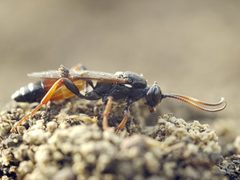
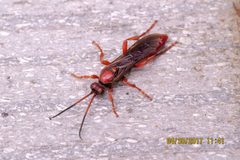
Pronunciation
How to pronounce Spilichneumon: /ˌspɪlɪkˈnjuːmɒn/
These audio files are automatically generated. While they are not always 100% accurate, they are a good starting point.
Identification
May be confused with paper wasps (Polistes), particularly the reddish P. carolina and P. perplexus, but Spilichneumon is noticeably smaller. Distinguished from Podalonia, another -hunting , by being an ichneumonid rather than a sphecid wasp. Precise species-level identification within the requires examination of minute morphological characters not reliably visible in field conditions.
Images
Appearance
Medium-sized ichneumon wasps with coloration that resembles paper wasps (Polistes), typically showing reddish and black patterns. Members of this are smaller than the similar-looking Polistes they may be confused with. Specific morphological details distinguishing the genus from related ichneumonid genera are not well-documented in available sources.
Habitat
Open woodlands and forest floor environments where leaf litter accumulates. seek shelter in rotten logs and other protected situations for . The tend to avoid extreme heat and direct sunlight, being more active during cooler periods.
Distribution
Holarctic and Oriental regions globally. In North America, most occur in the extreme northern United States, Canada, and Alaska, with extending south along major mountain ranges to Arizona. At least four species are present in Colorado.
Seasonality
Active primarily in early spring, being among the first observed after winter. overwinter and emerge as temperatures warm. Activity decreases during the warmest parts of the day; the wasps tend to shun extreme heat and direct sunlight.
Host Associations
- Noctuidae - Internal of caterpillars; female injects single into
Life Cycle
Females locate noctuid caterpillars and inject a single . The larva feeds internally, allowing the to reach its pupal stage. The larva then pupates inside the host chrysalis and emerges as an .
Behavior
Skittish and active, making live specimens difficult to photograph. avoid extreme heat and direct sunlight, being more active during cooler periods of the day. Overwinter as adults in protected microhabitats such as rotten logs. Females search for prey among leaf litter on the forest floor.
Ecological Role
Human Relevance
Beneficial to agriculture and horticulture through of and other noctuid caterpillars that damage crops. Not known to sting humans; poses no direct threat. May be mistaken for stinging paper wasps due to superficial resemblance.
Similar Taxa
More Details
Taxonomic Uncertainty
-level identification within Spilichneumon is challenging; at least four species occur in Colorado alone, but they are not well-documented in the western United States.