
Apsilops
Förster, 1869
Species Guides
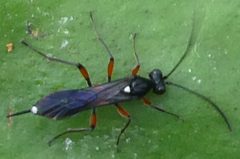
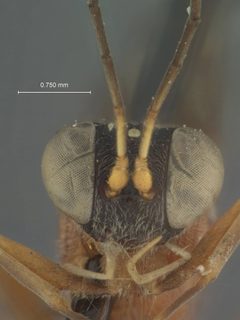
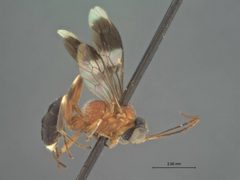
1Apsilops is a of ichneumonid wasps in the Cryptinae, containing approximately nine described . Members are of lepidopteran larvae, with documented associations including aquatic crambid and rice pests. The genus includes both aquatic and terrestrial species, reflecting diverse specializations among its members.
Pronunciation
How to pronounce Apsilops: /æpˈsaɪlɒps/
These audio files are automatically generated. While they are not always 100% accurate, they are a good starting point.
Images
Habitat
vary by : some occupy aquatic environments associated with water lilies and aquatic , while others occur in agricultural settings such as rice fields. Specific habitat requirements remain documented for only a few species.
Distribution
Recorded from Europe (Denmark, Norway, Sweden), Japan, and India. Distribution data are sparse for most .
Host Associations
- Parapoynx stagnalis (Zeller) - larval-pupal Rice case worm; of A. scotinus in India
- Neoschoenobia testacealis Hampson - Aquatic crambid , petiole borer of yellow water lily; of A. japonicus in Japan
Life Cycle
Larval-pupal development has been observed in A. scotinus, which attacks 4th to 5th instar larvae. Details for other are not documented.
Behavior
-searching has been studied in A. japonicus. A. scotinus has been observed in large when host are abundant.
Ecological Role
of lepidopteran larvae, including agricultural pests (rice case worm) and aquatic . Potential role in of rice pests.
Human Relevance
A. scotinus has been recorded as a natural enemy of the rice case worm, an agricultural pest, suggesting potential value in rice pest management programs.
More Details
Aquatic Adaptation
A. japonicus is documented as an aquatic , capable of locating and parasitizing in underwater environments. This represents a notable ecological specialization within the .
Sources and further reading
- BugGuide
- Wikipedia
- GBIF taxonomy match
- iNaturalist taxon
- NCBI Taxonomy
- Catalogue of Life
- New record of Apsilops scotinus (Tosquinet) (Hymenoptera: Ichneumonidae: Cryptinae) from India
- A new species of the genus Apsilops Förster (Hymenoptera: Ichneumonidae: Cryptinae) from Japan; parasitoid of an aquatic crambid moth
- The life history and host-searching behaviour of the aquatic parasitoid waspApsilops japonicus(Hymenoptera: Ichneumonidae), a parasitoid of the aquatic mothNeoshoenobia testacealis(Lepidoptera: Crambidae)