
Bathyplectes infernalis
(Gravenhorst, 1820)
Bathyplectes infernalis is a in the Ichneumonidae. It is a agent of the alfalfa weevil (Hypera postica), a major agricultural pest in western North America. The has been introduced and released in the United States as part of programs. It is one of several Bathyplectes species used to manage weevil in alfalfa fields.
Pronunciation
How to pronounce Bathyplectes infernalis: /ˌbæθɪˈplɛktiːz ˌɪnfərˈneɪlɪs/
These audio files are automatically generated. While they are not always 100% accurate, they are a good starting point.
Identification
As a small ichneumonid , B. infernalis can be distinguished from similar by its association with alfalfa weevil and its geographic distribution. It may be confused with the related B. anurus, which also parasitizes alfalfa weevil but exhibits distinctive cocoon-spinning and jumping in the larval stage. Accurate identification typically requires examination of morphological characters by a .
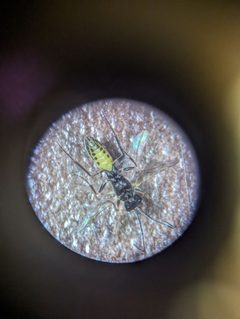
Images
Habitat
Alfalfa fields and agricultural landscapes where its , the alfalfa weevil, occurs. The is associated with cultivated Medicago sativa (alfalfa) stands rather than natural or undisturbed .
Distribution
Native to Europe (Denmark, Norway). Introduced and established in the conterminous 48 United States, where it is present in alfalfa-growing regions.
Diet
The larval stage develops as a within alfalfa weevil (Hypera postica) larvae, eventually killing the . feed on honeydew, including that produced by aphids in alfalfa fields.
Host Associations
- Hypera postica - primary Larval ; introduced to North America specifically for of this pest
Ecological Role
agent that reduces of the alfalfa weevil, an economically significant pest of alfalfa. Its presence can decrease reliance on chemical in programs. Interactions with other in alfalfa agroecosystems include indirect benefits from honeydew, which supports survival and may enhance rates.
Human Relevance
Used in programs to protect alfalfa crops from weevil damage. Its effectiveness contributes to reduced applications, though practices (reduced spraying, strips, flowering ) can further support .
Similar Taxa
- Bathyplectes anurusAlso parasitizes alfalfa weevil and has been released for in western North America. B. anurus is distinguished by larval cocoon-spinning and jumping , which B. infernalis does not exhibit.
- Bathyplectes curculionisAnother Bathyplectes used in alfalfa weevil ; morphological differentiation requires examination.
Sources and further reading
- BugGuide
- GBIF taxonomy match
- iNaturalist taxon
- NCBI Taxonomy
- Catalogue of Life
- Rhadine infernalis - Entomology Today
- Bathyplectes anurus Archives - Entomology Today
- Bathyplectes-anurus-cocoons - Entomology Today
- Rhadine infernalis Archives - Entomology Today
- How Entomologists are Battling Invasive Ants to Protect a Texas Cave Ecosystem
- Alfalfa Weevil: New Integrated Pest Management Guide Available