
Atanycolus
Förster, 1862
Species Guides
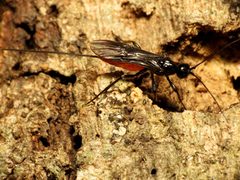
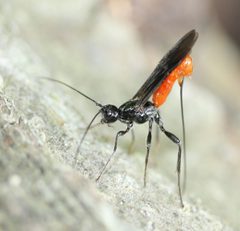
2Atanycolus is a of braconid wasps comprising over 70 described distributed worldwide. Species in this genus are of wood-boring beetles, primarily targeting larvae in Buprestidae (jewel beetles) and Curculionidae (weevils). Several species have been documented as natural enemies of pests, including the emerald ash borer (Agrilus planipennis). The genus has been recovered from North America, Europe, Asia, and Australia.
Pronunciation
How to pronounce Atanycolus: /əˈtænɪkələs/
These audio files are automatically generated. While they are not always 100% accurate, they are a good starting point.
Identification
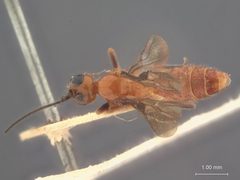
Small to medium-sized braconid wasps. Distinguishing features from similar braconid require examination of wing venation, segmentation, and metasomal structure. -level identification typically requires microscopic examination of morphological characters including ovipositor length and body proportions.
Images
Habitat
Associated with woody plants infested by larvae. have been observed searching for hosts on infested tree trunks and in subcortical environments.
Distribution
Widespread distribution including North America, Europe, Asia (including China and Japan), and Australia. GBIF records document presence in Denmark, Norway, and Sweden.
Host Associations
- Buprestidae - Primary ; includes wood-boring jewel beetles
- Curculionidae - Secondary ; includes weevils
- Agrilus planipennis - Emerald ash borer; pest in North America
- Lamprodila nobilissima bellula - Flatheaded wood borer of Rosaceae trees in North China (A. yangi)
Behavior
search for larvae in infested wood. At least one (A. initiator) exhibits host size selection discrimination when co-occurring with other species. Solitary parasitoid development observed in studied species.
Ecological Role
of wood-boring beetles. Functions as a natural agent, with potential to suppress of forest pests.
Human Relevance
Investigated as a native biocontrol agent for wood-boring pests, particularly the emerald ash borer in North America. Some show promise for contributing to programs.
Similar Taxa
- SpathiusCo-occurring braconid of subcortical beetles; A. initiator distinguished by larger body size (about 8× heavier) and longer ovipositor (3.7× longer)
- HeterospilusAnother native braconid recovered from emerald ash borer; distinguished by different associations and morphological characters
- Tetrastichus planipennisiIntroduced eulophid of emerald ash borer; Atanycolus spp. partition by bark thickness, with Atanycolus spp. typically attacking hosts in thicker bark
Sources and further reading
- BugGuide
- Wikipedia
- GBIF taxonomy match
- iNaturalist taxon
- NCBI Taxonomy
- Catalogue of Life
- Atanycolus Archives - Entomology Today
- Working with Cerceris fumipennis—Part 1 | Beetles In The Bush
- Native Wasps Look Promising as EAB Biocontrol Agents in Kentucky
- Description of a new species of the genus Atanycolus Foerster (Hymenoptera: Braconidae) parasitizing Lamprodila nobilissima bellula (Lewis) (Coleoptera: Buprestidae) in China
- Biology of the Two Parasitoid Wasps, Atanycolus initiator(FABRICIUS)and Spathius brevicaudis RATZEBURG(Hymenoptera:Braconidae), on Subcortical Beetles in Japanese Pine Trees
- Biology and Life History ofAtanycolus cappaerti(Hymenoptera: Braconidae), a North American Larval Parasitoid Attacking the Invasive Emerald Ash Borer (Coleoptera: Buprestidae)
- The effect of bark thickness on host partitioning between Tetrastichus planipennisi (Hymen: Eulophidae) and Atanycolus spp. (Hymen: Braconidae), two parasitoids of emerald ash borer (Coleop: Buprestidae)
- Factors Causing the Difference in Parasitism Pattern between Two Parasitoid Wasps, Atanycolus initiator(FABRICIUS)and Spathius brevicaudis RATZEBURG(Hymenoptera:Braconidae), on Subcortical Beetles in Japanese Pine Trees