
Heterospilus
Haliday, 1836
Species Guides
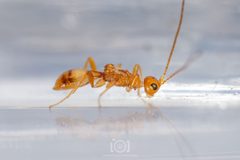
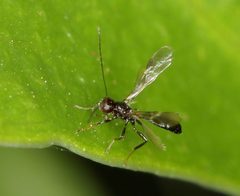
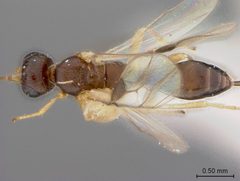
1Heterospilus is a of braconid wasps in the Doryctinae containing at least 130 described . Members are solitary ectoparasitoids that attack the larvae and pupae of beetles, particularly seed beetles in the subfamily Bruchinae. The genus has been studied for its behavioral , including facultative sex allocation and (death feigning) as an antipredator defense.
Pronunciation
How to pronounce Heterospilus: /ˌhɛtəroʊˈspaɪləs/
These audio files are automatically generated. While they are not always 100% accurate, they are a good starting point.
Identification
Heterospilus can be distinguished from other doryctine braconids by features of the wing venation and metasomal structure; precise identification requires examination of microscopic characters. Species-level identification is challenging and typically requires taxonomic expertise.
Images
Habitat
Semi-desert grassland; have been observed on seed pods drying on branches of Prosopis (Mimosoideae).
Distribution
Widespread distribution including North America (Arizona), Europe (Italy), and Asia (Korean Peninsula).
Host Associations
- Bruchinae - larvae and pupae of seed beetles
- Callosobruchus maculatus - laboratory on cowpea Vigna unguiculata
- Gastrallus pubens - Ptinidae in Italy
Life Cycle
Solitary ectoparasitoid. emerge from remains. Adult longevity without food source has been recorded as 7–19 days (mean 15.7 days) in H. prosopidis.
Behavior
(death feigning) has been observed as an antipredator , induced by physical stimuli such as touching with tweezers, followed by dropping to the ground. Frequency and duration of thanatosis vary with age, sex, and temperature: more frequent in young individuals and females at lower temperatures, with longer duration in females.
Ecological Role
of bruchid and other larvae; functions as a natural enemy and potential agent of seed beetle .
Human Relevance
Studied as a model organism for behavioral research on sex allocation strategies and antipredator ; potential agent for stored-product pest beetles.
Similar Taxa
- Other Doryctinae generaSimilar body plan and lifestyle; distinguished by wing venation, metasomal structure, and associations.
More Details
Sex allocation
Females exhibit facultative sex allocation, adjusting offspring sex ratios based on quality and presence of competing females. Female-biased sex ratios are produced on high-quality hosts, while more male offspring are produced on low-quality hosts or under conditions of local mate competition. This strategy has a heritable genetic component.
Mating system
Females are monogamous (a single copulation is sufficient), while males can perform multiple copulations. This asymmetry may explain sex differences in duration, as males greater costs from missed mating opportunities.
Sources and further reading
- BugGuide
- Wikipedia
- GBIF taxonomy match
- iNaturalist taxon
- NCBI Taxonomy
- Catalogue of Life
- GENETIC VARIATION OF SEX ALLOCATION IN THE PARASITOID WASP HETEROSPILUS PROSOPIDIS
- Factors Affecting Thanatosis in the Braconid Parasitoid Wasp Heterospilus prosopidis
- GENETIC VARIATION OF SEX ALLOCATION IN THE PARASITOID WASP HETEROSPILUS PROSOPIDIS
- The ectoparasitoid wasp Heterospilussicanus (Marshall, 1888) (Hymenoptera, Braconidae, Doryctinae) as a natural enemy of Gastralluspubens Fairmaire, 1875 (Coleoptera, Ptinidae) in Italy.
- Review of species of the genus Heterospilus Haliday, 1836 (Hymenoptera, Braconidae, Doryctinae) from the Korean Peninsula.