
Pogonomyrmex pima
Wheeler, 1909
Pima-group Harvester Ants
Pogonomyrmex pima is a seed-harvesting in the Pogonomyrmex, described by Wheeler in 1909. As a member of the group, it belongs to a lineage known for constructing large nest clearings, collecting and storing seeds, and possessing potent defensive stings. The is part of the Pima species group within the genus, which is distributed across arid regions of North America. Like other Pogonomyrmex species, P. pima likely plays significant ecological roles in seed , soil nutrient cycling, and as a food source for specialized .
Pronunciation
How to pronounce Pogonomyrmex pima: //ˌpoʊɡənoʊˈmaɪrmɛks ˈpiːmə//
These audio files are automatically generated. While they are not always 100% accurate, they are a good starting point.
Identification
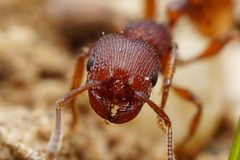
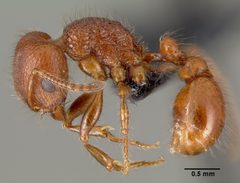
Pogonomyrmex pima belongs to the Pima group, a complex of closely related species. Distinguishing P. pima from other members of this group requires examination of morphological characters such as shape, mandibular , and pilosity patterns. The species typically exhibits the robust head and strong characteristic of seed-harvesting Pogonomyrmex. Accurate identification to species level within the Pima group often requires reference to original species descriptions and comparison with , as field identification can be challenging due to morphological similarity among related species.
Images
Habitat
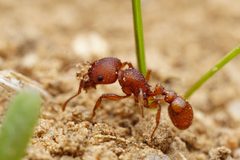
Arid and semi-arid environments typical of the southwestern United States and northwestern Mexico, where the Pima group is distributed. Like other harvester ants, P. pima constructs nests in open ground with cleared vegetation disks.
Distribution
The Pima group, including P. pima, is distributed in the southwestern United States and northwestern Mexico. Specific locality records for P. pima itself are sparse in the provided sources, but the species was described from material collected in the region inhabited by the Pima people (southern Arizona and northern Sonora).
Diet
Seeds constitute the primary food source, as is characteristic of all Pogonomyrmex harvester ants. The collects, transports, and stores seeds in underground granaries. Opportunistic and scavenging of arthropods likely supplements this seed-based diet, though specific dietary records for P. pima are not documented in the provided sources.
Behavior
Morning patrollers likely emerge to assess foraging conditions before commence seed collection, following the behavioral pattern documented in other red harvester ants. Foraging activity is probably concentrated during favorable temperature periods in arid environments. The possesses a functional sting for defense of the colony and seed stores.
Ecological Role
As a , P. pima likely functions as a in its . Its nest construction creates 'islands of ' that enhance soil nutrients and provide microhabitats for vegetation recovery following disturbance. Seed harvesting activities influence plant composition and serve as an important seed mechanism. The probably serves as prey for specialized including horned lizards and other .
Human Relevance
The potent sting of Pogonomyrmex , including those in the Pima group, can cause significant pain lasting several hours. However, stings are relatively easy to avoid as these ants do not fly and rarely enter human structures. The species contributes to services including soil enrichment and vegetation recovery in arid landscapes.
Similar Taxa
- Pogonomyrmex maricopaBoth belong to the Pima group and share morphological similarities. P. maricopa is distinguished by being the most venomous insect known, with exceptionally toxic venom, though visual separation in the field is difficult and requires detailed examination.
- Pogonomyrmex californicusAnother member of the Pima group with overlapping distribution in the southwestern United States. Differences in , pilosity, and geographic range aid separation, though these characters require careful microscopic examination.
- Pogonomyrmex rugosusA with broadly similar and appearance, but belonging to a different group (the Ephebomyrmex group). P. rugosus typically has more pronounced sculpturing on the and mesosoma compared to P. pima.
Sources and further reading
- BugGuide
- GBIF taxonomy match
- iNaturalist taxon
- NCBI Taxonomy
- Catalogue of Life
- Ants and Moths: Think Noon and Night! | Bug Squad
- Carbo-loading here and there: Odorous house ants, Tapinoma sessile, and harvester ants, Pogonomyrmex — Bug of the Week
- The Painful but Fascinating Stings of Harvester Ants
- Harvester Ant Nest Rims Boost Native, Nonnative Plants Alike
- Harvester Ants Have a Taste for Exotic Seeds
- Heroes, Not Headaches: Reframing the Reputation of Harvester Ants