
Myrmecocystus mendax
Wheeler, 1908
honey ant, honeypot ant
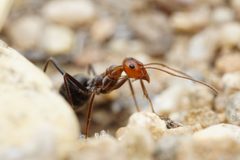
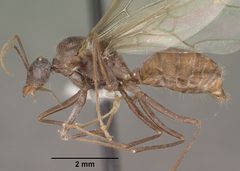
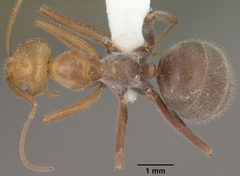
Myrmecocystus mendax is a of honeypot native to Mexico and the Southwestern United States. The species exhibits notable intraspecific variation in social organization: in the Sierra Ancha Mountains of central Arizona display primary with cooperative colony founding by multiple unrelated queens, while Chiricahua Mountains populations are predominantly monogynous with single- founding. Mature colonies in polygynous populations contain an average of 6.27 queens. The species produces specialized that serve as living food storage vessels.
Pronunciation
How to pronounce Myrmecocystus mendax: /mɜrˌmɛkoʊˈsɪstəs ˈmɛndæks/
These audio files are automatically generated. While they are not always 100% accurate, they are a good starting point.
Images
Habitat
Sierra Ancha Mountains of central Arizona; Chiricahua Mountains of southeastern Arizona. Specific microhabitat details beyond these mountain ranges are not documented in available sources.
Distribution
Mexico and Southwestern United States. Specific documented locations include: Arizona, USA (Sierra Ancha Mountains in central Arizona; Chiricahua Mountains in southeastern Arizona).
Life Cycle
Colony founding occurs through either haplometrosis (single ) or facultative pleometrosis (multiple queens), with the mode determined by . In the Sierra Ancha population, foundresses are facultatively pleometrotic, establishing cooperative colonies without queen reduction. Incipient colonies produce minims and , some of which develop into (honeypots) for food storage. raiding between incipient colonies has been observed, and rare colony fusion events can occur with continued by queens from both original colonies.
Behavior
Exhibits intraspecific variation in colony founding between . Sierra Ancha foundresses display cooperative founding with unrelated queens and no aggressive reduction. Chiricahua foundresses show strong intraspecific aggression when forced to co-found and primarily found colonies alone. raiding occurs between incipient colonies. Queens from colonies with more show higher survival rates in experimental conditions. serve as specialized food storage within colonies.
Sources and further reading
- BugGuide
- Wikipedia
- GBIF taxonomy match
- iNaturalist taxon
- NCBI Taxonomy
- Catalogue of Life
- Hot Competition: Climate Change, Invasive Fly Displace a Native Blueberry Pest
- Bug Eric: Anteater Scarab Beetles
- Bug Eric: New Mexico Dragonfly Blitz - Day 3
- Belostomatidae | Beetles In The Bush
- Intraspecific variation in colony founding behavior and social organization in the honey ant Myrmecocystus mendax
- Correction to: Intraspecific variation in colony founding behavior and social organization in the honey ant Myrmecocystus mendax