
Myrmecocystus kennedyi
Snelling, 1969
Kennedyi-group Honeypot Ants
Myrmecocystus kennedyi is a of honeypot ant in the subgenus Endiodioctes, first described by Snelling in 1969. The species is native to arid and semi-arid regions of the western United States and western Mexico. Like other honeypot ants, this species is characterized by specialized that store liquid food in their distended . The species has been documented as a for myrmecophilous beetles in the Cremastocheilus.
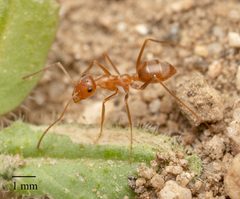
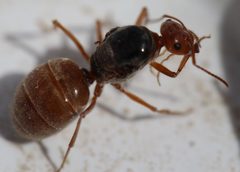
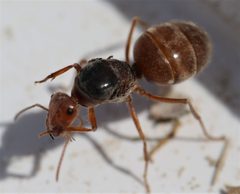
Pronunciation
How to pronounce Myrmecocystus kennedyi: /ˌmɜːrmɪkoʊˈsɪstəs ˈkɛnɪdaɪ/
These audio files are automatically generated. While they are not always 100% accurate, they are a good starting point.
Identification
The subgenus Endiodioctes, to which M. kennedyi belongs, is distinguished by having two or three maxillary palpomeres. Specific diagnostic features for M. kennedyi are not documented in available sources. The belongs to the Kennedyi-group of honeypot ants, which may share morphological characteristics with related species in the complex.
Images
Habitat
Arid and semi-arid environments of the western United States and western Mexico. Specific microhabitat preferences are not documented.
Distribution
Western United States and western Mexico. Precise range boundaries are not established in available literature.
Host Associations
- Cremastocheilus - Myrmecocystus kennedyi has been recorded as a for anteater scarab beetles (Cremastocheilus), which feed on larvae and pupae within the nest.
Similar Taxa
- Other Myrmecocystus speciesM. kennedyi belongs to the Kennedyi-group, a complex of related that may require detailed morphological examination to distinguish. The subgenus Endiodioctes separates it from species in other subgenera.
More Details
Taxonomic status
Myrmecocystus kennedyi is classified in the subgenus Endiodioctes. The iNaturalist treats this as a , suggesting potential unresolved taxonomic questions or cryptic diversity within the group.