
Zadiprion
Rohwer, 1918
Species Guides
2- Zadiprion rohweri(Pinyon Pine Sawfly)
- Zadiprion townsendi(bull pine sawfly)
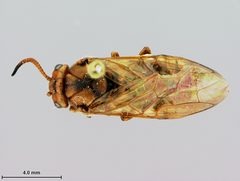
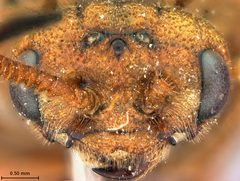
Zadiprion is a of in the Diprionidae (Hymenoptera) to Mexico. in this genus are specialized defoliators of pine needles (Pinus spp.), with some species causing severe in pine-oak forests. The genus includes at least four described species: Z. falsus, Z. howdeni, Z. llanderalae, and Z. rohweri. Females exhibit maternal care by remaining at oviposition sites to guard .

Pronunciation
How to pronounce Zadiprion: //zəˈdɪpriˌɒn//
These audio files are automatically generated. While they are not always 100% accurate, they are a good starting point.
Images
Habitat
Pine-oak forests and oak forests in mountainous regions of Mexico, typically at elevations around 1,920 m. Associated with stands of Pinus including P. oaxacana, P. patula, P. leiophylla, P. teocote, and P. pseudostrobus.
Distribution
Mexico: recorded from multiple states including Oaxaca (Sierra Juárez/Sierra Norte: Ixtlán de Juárez, Santa Catarina Ixtepeji, Santiago Xiacui, Santa María Jaltianguis, Nuevo Zoquiapam, Pueblos Mancomunados), State of Mexico, and other regions where pines occur.
Diet
Larvae feed on needles of Pinus . Documented include Pinus oaxacana (principal host for Z. llanderalae), P. patula, P. leiophylla, P. edulis (for Z. rohweri), P. teocote, and P. pseudostrobus.
Host Associations
- Pinus oaxacana - primary main for Z. llanderalae
- Pinus patula -
- Pinus leiophylla -
- Pinus edulis - for Z. rohweri
- Pinus teocote - recorded by other authors
- Pinus pseudostrobus - recorded by other authors
Life Cycle
(one per year). active June–October; larvae present June–November; cocoons in soil/litter September–December. Larvae develop through multiple instars. Cocoons formed in soil or litter layer.
Behavior
Females exhibit maternal care by remaining at oviposition sites after laying on pine needles to guard them. Severe can cause extensive defoliation of trees.
Ecological Role
Defoliator of pine forests; can reach densities (e.g., 39.2 cocoons/m² reported for Z. llanderalae). Subject to natural by , particularly of Exenterus (Ichneumonidae), with rates reaching 50.1% of cocoons. Serves as for parasitoids.
Human Relevance
Economic pest of pine forests. Z. llanderalae caused severe affecting 12,194 hectares in Oaxaca by 2021. Management planning requires understanding of its and natural enemy complex.
Similar Taxa
- NeodiprionBoth are diprionid that defoliate conifers; Zadiprion is restricted to Mexico while Neodiprion is primarily Nearctic
- DiprionBoth are conifer-feeding diprionid ; Zadiprion females have distinct ovipositor and exhibit maternal care not reported in Diprion
Sources and further reading
- BugGuide
- GBIF taxonomy match
- iNaturalist taxon
- NCBI Taxonomy
- Nuevo Registro de Zadiprion roteus1 y sus Parasitoides Asociados en el Estado de México, México
- New Host and Distribution Records for Zadiprion rohweri (Middleton) (Hymenoptera: Diprionidae), a Pinyon Pine Sawfly
- Descripción y biología de una nueva especie de Zadiprion (Hymenoptera: Diprionidae) en la Sierra Juárez de Oaxaca, México
- DISTRIBUTION OF THE DEFOLIATING PEST ZADIPRION FALSUS: AN ANÁLISIS OF OVERLAPPING NICHES OF ITS HOSTS IN MEXICO