
Neodiprion edulicolus
Ross, 1955
Pinyon Sawfly, Pinyon Pine Sawfly
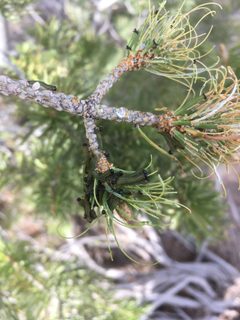
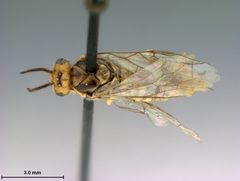
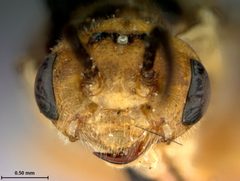
Neodiprion edulicolus, the pinyon pine sawfly, is a conifer-feeding to the Intermountain Region of western North America. The periodically undergoes causing extensive defoliation of singleleaf pinyon pine (Pinus monophylla), with over 100,000 acres affected during documented events in 1965-1966 in eastern Nevada. Unlike bark beetles and fungi that typically dominate conifer health concerns, this folivore can render trees commercially unfit for Christmas tree sales. Outbreaks have historically been short-lived, with populations declining due to climatic factors and pressure.
Pronunciation
How to pronounce Neodiprion edulicolus: /ˌniː.oʊˈdaɪ.priː.ˌɒn ˌeɪ.dʊˈlaɪ.kələs/
These audio files are automatically generated. While they are not always 100% accurate, they are a good starting point.
Identification
Larval identification relies on coloration and field characteristics distinct from ; specific diagnostic features for N. edulicolus versus related Neodiprion require reference to the larval identification key provided in Davis et al. (2023, Journal of ). are stingless with a saw-like ovipositor used to insert into conifer foliage.
Images
Habitat
Singleleaf pinyon pine (Pinus monophylla) forests in the Intermountain Region. Larvae feed on needles; ultimate instars drop to ground level to spin cocoons in duff layer and sandy soil beneath host trees.
Distribution
Intermountain Region of western North America; documented from eastern Nevada (Pioche and Caliente areas).
Seasonality
overwinter in needles; occurs April through mid-May. Larval feeding progresses through June. emerge October to November for mating and oviposition.
Diet
Singleleaf pinyon (Pinus monophylla) needles. Young larvae feed by consuming portions of needles; older instars consume entire needles.
Host Associations
- Pinus monophylla - obligate singleleaf pinyon
Life Cycle
overwinter within needles. spans April to mid-May. Larvae develop through four to six instars, feeding gregariously on needles. Ultimate instars drop to ground in June, spinning cocoons in duff and sandy soil beneath host trees. Prepupal lasts through summer; occurs in fall. emerge October-November to mate and oviposit, completing one annually.
Behavior
Larvae feed gregariously during most of the larval stage. Ultimate instars exhibit negative geotaxis, dropping from trees to spin cocoons in ground-level substrates.
Ecological Role
Primary consumer and defoliator of pinyon pine in its native range. Periodic can temporarily reduce and commercial value. are moderated by climatic factors and larval , which have historically terminated outbreak phases.
Human Relevance
Economic impact through defoliation of Christmas tree-quality pinyon pines; over 100,000 acres rendered unfit for commercial sale during 1965-1966 in Nevada. Management rarely requires chemical intervention due to natural enemy regulation.
Similar Taxa
- Neodiprion leconteiRedheaded pine shares and but occurs on different pine (black pine, Scots pine, Mugo pine) in eastern North America; distinguished by larval coloration including bright scarlet and specific spotting patterns per Davis et al. (2023) larval key.
- Other Neodiprion speciesMultiple (N. compar, N. maurus, N. pinetum, N. fabricii) occur in eastern North America on various pine ; larval identification requires use of color-based diagnostic key as morphological convergence is high within .
More Details
Population Dynamics
of N. edulicolus have been characterized as short-lived with no documented widespread tree mortality. The 1959-1966 Nevada outbreak sequence demonstrates classic eruptive : detection (1959), suppression by climate and (1960), resurgence (1965-1966), and termination by similar factors (1966).
Taxonomic Note
Authority Ross, 1955; placed in Diprionidae, Diprioninae. explicitly described as 'typical of Neodiprion ' in source literature, indicating conserved developmental pattern across .
Sources and further reading
- BugGuide
- iNaturalist taxon
- NCBI Taxonomy
- Crazy redheads - Redheaded pine sawfly, Neodiprion lecontei(MISSING VIDEO AND LINKS) — Bug of the Week
- What's Eating Your Pine Needles? Sawflies, Probably
- Conifer sawfly larva - Entomology Today
- OBSERVATIONS ON THE PINYON PINE SAWFLY, NEODIPRION EDULICOLUS, IN EASTERN NEVADA (HYMENOPTERA: DIPRIONIDAE)