
Callirhytis quercusventricosa
(Bassett, 1864)
Callirhytis quercusventricosa is a of gall wasp in the Cynipidae, known for inducing galls on oaks (Quercus). The species exhibits the complex typical of Cynipini, with alternating sexual and that produce distinct gall morphologies on different oak tissues. It is one of numerous oak-galling species in the large Callirhytis.
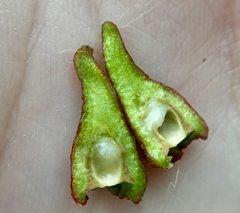
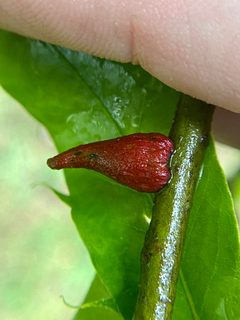
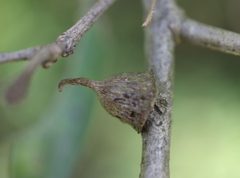
Pronunciation
How to pronounce Callirhytis quercusventricosa: /kæˈlaɪrɪtɪs kwɛrˌkuːsˌvɛntrɪˈkoʊsə/
These audio files are automatically generated. While they are not always 100% accurate, they are a good starting point.
Identification
Identification to requires examination of gall , oak species, and microscopic features of . The species name 'quercusventricosa' suggests association with oaks (Quercus) and possibly swollen or ventricose gall shape, but this is not confirmed in available sources. Differentiation from such as C. quercuspunctata and C. clavula requires knowledge of Cynipidae and regional oak-gall fauna.
Images
Habitat
Associated with oak-dominated , including forests, woodlands, and areas where Quercus occur. Specific microhabitat preferences are not documented.
Distribution
North America. The has been recorded in the United States, with iNaturalist observations distributed across eastern and central regions. Precise range boundaries are not established.
Seasonality
Activity patterns follow the typical Cynipini cycle, with sexual emerging in spring and generation in late summer to fall. Exact timing varies with geographic location and .
Host Associations
- Quercus - gall inducer specificity at the oak level is not documented in available sources.
Life Cycle
Exhibits heterogony (): a sexual produces one type of gall on one oak tissue, and an (parthenogenetic) generation produces a different gall type, typically on a different tissue or even different oak . Specific details of the two generations for this species are not documented.
Ecological Role
As a gall inducer, modifies oak tissue to create protected microhabitats for larval development. Galls may provide resources for , , and other associated organisms, contributing to local complexity.
Human Relevance
No direct economic or agricultural significance. Of interest to entomologists and naturalists studying oak gall diversity and cynipid .
Similar Taxa
- Callirhytis quercuspunctataSimilar oak-galling habit and distribution; differentiated by gall and associations, though specific distinctions for C. quercusventricosa are not detailed in available sources.
- Callirhytis clavulaCongeneric oak gall wasp with overlapping range; produces distinct gall types that differ in texture and seasonal appearance.
- Antistrophus spp.Different in Cynipidae that also induces stem galls; distinguished by plant (rosinweed, Silphium rather than oak) and gall structure.
More Details
Taxonomic note
The specific epithet 'quercusventricosa' combines 'quercus' (oak) and 'ventricosa' (swollen or pot-bellied), likely referring to gall shape, but original description details are not accessible in provided sources.
Data limitations
Published biological and ecological information for this is sparse. Most available data comes from general treatments of North American Cynipidae and citizen science observations rather than targeted research.