
Callirhytis quercusgemmaria
Callirhytis quercusgemmaria is a gall wasp in the Cynipidae that induces galls on oak (Quercus) . Like other members of the Callirhytis, this species has a complex involving alternating that produce different gall types on different parts of the plant. The specific epithet 'quercusgemmaria' refers to its association with oak buds or gemmae. This species is part of the highly diverse oak gall wasp fauna of North America, where more than 1,300 cynipid species have been described, most with intimate host relationships with particular oak species.
Pronunciation
How to pronounce Callirhytis quercusgemmaria: /ˌkælɪˈraɪtɪs kwɜrˌkus dʒɛˈmɛriə/
These audio files are automatically generated. While they are not always 100% accurate, they are a good starting point.
Identification
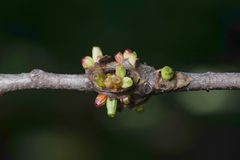
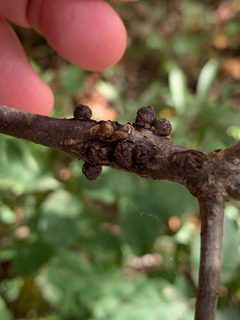
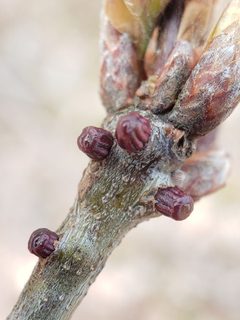
Distinguished from other Callirhytis by the specific gall and location on the plant. The gall induced by C. quercusgemmaria is associated with oak buds. Accurate identification typically requires examination of the gall structure, host plant species, and location on the plant, as are minute and morphologically similar across related species. Molecular or detailed morphological analysis by is often necessary for definitive identification.
Images
Habitat
Found in supporting oak (Quercus), including deciduous forests, woodlands, forest edges, and urban areas with oak plantings. Specific microhabitat requirements relate to the presence of suitable oak species and their buds.
Distribution
Documented in North America where its oaks occur. iNaturalist records indicate observations across the eastern and central United States. Specific range boundaries are not well defined in accessible literature.
Seasonality
Activity patterns follow the of oak bud development. Specific seasonal timing for this is not well documented, but cynipid gall wasps typically show -specific activity periods corresponding to host plant growth stages.
Diet
Larvae feed on nutritive plant tissues induced within galls. do not feed; their mouthparts are reduced or non-functional.
Host Associations
- Quercus - gall inducerOak ; specific associations require verification
Life Cycle
Has a complex heterogonic with alternating sexual and parthenogenetic (agamic) , typical of many Cynipidae. One generation produces a distinct gall type, often on buds or leaves, while the alternate generation produces a different gall structure. Development from to occurs within the gall. Specific details of the two generations for this are not well documented in accessible sources.
Behavior
Females insert into plant tissue using their ovipositor, simultaneously introducing chemical stimuli that redirect plant development to form galls. Larvae develop in relative safety within galls, feeding on specialized nutritive tissues. emerge by chewing exit holes through gall tissue.
Ecological Role
As a gall inducer, modifies plant growth and creates for a of associated organisms. Galls may serve as food sources for birds and small mammals, and provide shelter for and . The gall tissue represents a sink for plant nutrients, potentially affecting host plant growth and .
Human Relevance
Not of direct economic importance. Gall wasps contribute to biodiversity and serve as subjects for ecological and evolutionary research on plant-insect interactions, speciation, and complex . Heavy of related cynipid can cause aesthetic damage to ornamental oaks.
Similar Taxa
- Callirhytis quercuscornigeraAlso induces galls on oaks; distinguished by the distinctive horned oak gall structure on twigs versus bud-associated galls of C. quercusgemmaria
- Other Callirhytis speciesMorphologically similar ; separation requires gall , plant, and location on plant
- Neuroterus speciesAnother of oak gall wasps with similar ; distinguished by gall structure and typically smaller, leaf-associated galls
More Details
Taxonomic Note
The Callirhytis has undergone taxonomic revision; some literature may reference under former names or related genera. The specific epithet 'quercusgemmaria' derives from Latin 'quercus' (oak) and 'gemma' (bud), indicating the gall location.
Research Significance
Callirhytis , including C. quercuscornigera, have been studied to understand gall , including interactions with , , and hyperparasitoids that form complex within galls.