
Amphibolips nubilipennis
(Harris, 1841)
translucent oak gall wasp
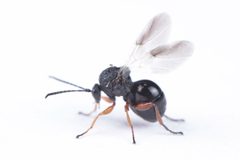
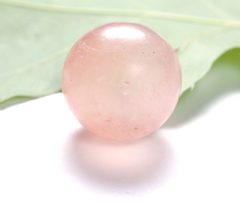
Amphibolips nubilipennis is a gall wasp in the Cynipidae that induces distinctive succulent galls on oak trees. The exhibits a complex with alternating sexual and , each producing different gall types. The translucent oak gall formed by the sexual generation accumulates exceptionally high concentrations of malic acid, creating extremely acidic tissue conditions. This species has been documented across eastern North America and serves as a model organism for studying gall chemistry and plant-insect interactions.
Pronunciation
How to pronounce Amphibolips nubilipennis: /æmˈfɪbəlɪps njuːbɪlaɪˈpɛnɪs/
These audio files are automatically generated. While they are not always 100% accurate, they are a good starting point.
Identification
The is identified by the distinctive translucent oak gall induced by its sexual , which appears succulent and semi-transparent. Field identification relies on gall characteristics rather than , as the wasps themselves are minute and difficult to distinguish from related cynipids without microscopic examination. The gall's extreme acidity and high malic acid content are diagnostic chemical features.
Images
Habitat
Associated with oak forests and woodlands, specifically tied to trees in the Quercus. Occupies where suitable oak occur, ranging from dry upland forests to mixed hardwood stands.
Distribution
Eastern North America including Ontario and Quebec in Canada, and much of the eastern United States. Documented from states throughout the eastern and central U.S. where oaks are present.
Host Associations
- Quercus buckleyi - gall
- Quercus coccinea - gall
- Quercus falcata - gall
- Quercus ilicifolia - gall
- Quercus imbricaria - gall
- Quercus marilandica - gall
- Quercus rubra - gall
- Quercus velutina - gall
Life Cycle
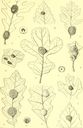
Alternating with distinct developmental patterns. The sexual generation induces the translucent oak gall, which is succulent and chemically distinctive. The generation produces a different gall type (spherical gall). Larvae develop within galls, feeding on specialized nutritive tissue that the plant produces in response to manipulation.
Ecological Role
Acts as a gall inducer that manipulates oak physiology to create protected feeding chambers. The extreme acidity of sexual galls has been proposed as a defensive chemical strategy against . Serves as a food source and for specialized parasitoids and within the gall .
Human Relevance
Contributes to scientific understanding of plant-insect chemical interactions and gall . The ' gall chemistry has been studied as a model for defensive strategies in insect-plant relationships. No direct economic importance to agriculture or forestry has been documented.
Similar Taxa
- Other Amphibolips speciesMany Amphibolips induce oak galls; identification requires examination of gall , chemistry, and specificity. The translucent gall and extreme acidity are distinctive for A. nubilipennis.
- Other Cynipidae on oaksNumerous cynipid induce oak galls; microscopic examination of and detailed gall characteristics are necessary for definitive identification.