
Trypoxylini
Lepeletier de Saint Fargeau, 1845
Genus Guides
3- Pison
- Pisonopsis(square-headed wasps)
- Trypoxylon(keyhole wasps)
Trypoxylini is a tribe of digger wasps in the Crabronidae, containing at least 840 described . The tribe includes nine extant and two fossil , with Trypoxylon being the most species-rich and well-known. Members are solitary that provision nest with paralyzed prey for their larvae. The group has a distribution with documented occurrences across Europe, Asia, and other regions.
Pronunciation
How to pronounce Trypoxylini: /trɪˌpɒkˈsaɪlɪnaɪ/
These audio files are automatically generated. While they are not always 100% accurate, they are a good starting point.
Identification
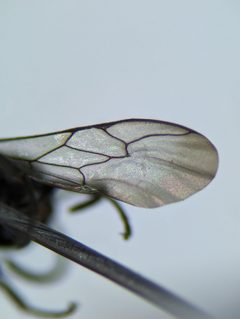
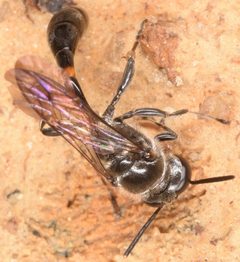
Trypoxylini can be distinguished from related crabronid tribes by a combination of morphological features including specific wing venation patterns and genital structure, though precise diagnostic characters vary by . Trypoxylon are recognized by their elongated, cylindrical petiole and often possess a pronounced constricted waist. Pison species typically exhibit a more robust body form with reduced wing venation compared to Trypoxylon. Definitive tribal-level identification requires examination of multiple characters and is generally not feasible from casual observation alone.
Images
Distribution
distribution with records from Europe, Asia, North America, and other regions. Documented occurrences in European Russia include multiple Trypoxylon with expanding known ranges.
Behavior
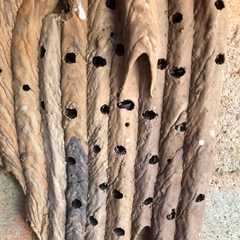
Solitary nesting with females constructing nests in pre-existing cavities or excavated burrows. Females provision nest with paralyzed prey, primarily spiders, which serve as food for developing larvae. Nest construction materials vary by ; some use mud to construct or partition nest cells.
Ecological Role
of spiders and other small arthropods; contribute to regulation of prey . Serve as prey for larger predators and within .
Human Relevance
Generally not aggressive toward humans; stings are possible but uncommon due to solitary nature. Some nest in artificial structures including holes in wood and masonry, occasionally bringing them into proximity with human habitation.
Similar Taxa
- AmmophiliniAlso contains solitary thread-waisted wasps that provision nests with paralyzed prey; distinguished by different wing venation and nest construction , typically using caterpillars rather than spiders as larval food.
- SpheciniSimilar body plan with elongated petiole; differs in prey type (grasshoppers and katydids rather than spiders) and often exhibits different nesting substrate preferences.
More Details
Taxonomic history
Formerly classified within traditional Sphecidae, now placed in Crabronidae following phylogenetic revisions of . The tribe was established by Lepeletier de Saint Fargeau in 1845.
Fossil record
Contains two fossil : †Eopison Nel, 2005 and †Megapison Zhang, 1989, indicating ancient lineage within the Crabronidae.