
Pison
Jurine in Spinola, 1808
Species Guides
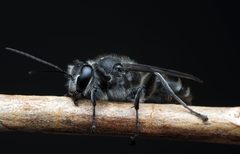
1- Pison koreense(square-headed wasp)
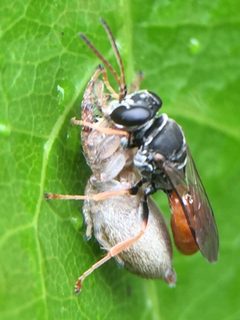
Pison is a of spider wasps in the Crabronidae, comprising approximately 145 described with many more undescribed, particularly in South America. females hunt and paralyze living spiders to provision nest , on which they lay . The genus exhibits diverse nesting strategies, including mud construction, use of natural cavities, and excavation of burrows. Pison are most diverse in the Southern Hemisphere, with about one-third of species occurring in Australia.
Pronunciation
How to pronounce Pison: /ˈpiːsɒn/
These audio files are automatically generated. While they are not always 100% accurate, they are a good starting point.
Identification
Members of Pison can be recognized by their slender, thread-waisted build typical of Crabronidae, with females possessing a well-developed stinger for spider paralysis. The is distinguished from related trygoxylines by subtle morphological features of wing venation and genitalia, though -level identification requires examination. Many species have a metallic sheen, with P. argentatum and P. iridipenne showing particularly bright iridescence.
Images
Habitat
Occurs in tropical and warm temperate regions, utilizing diverse nesting substrates including holes in wood, keyholes, hollow plant stems, burrows, abandoned bird nests, caves, tree hollows, and self-excavated soil tunnels. Many favor sheltered situations for nest construction.
Distribution
in tropical and warm temperate regions worldwide, absent from more northerly temperate zones. Highest diversity in the Southern Hemisphere; approximately one-third of occur in Australia. Several species including P. argentatum and P. iridipenne have been widely dispersed by human transport via ships and aircraft, rendering their native distributions uncertain.
Diet
are nectar feeders; larvae are exclusively , feeding on paralyzed spiders provided by the mother.
Host Associations
Life Cycle
Females construct nest , provision each with one or more paralyzed spiders, lay a single on the spider(s), and seal the cell with mud or pellets. The paralyzed spiders remain preserved without decay. Larvae hatch and consume the spiders, then pupate within the sealed cell before emerging as . Cells are typically isolated from one another within larger nesting structures to prevent competition between larvae.
Behavior
Females exhibit specialized hunting , seeking out spiders and delivering a precise paralyzing sting that preserves the prey in living condition without decay. Nesting behavior varies substantially: some construct large mud nests, others repurpose natural or pre-existing cavities, and some excavate their own tunnels. Multiple are typically aggregated within a single nesting structure.
Ecological Role
As of spiders, Pison regulate spider . Their nesting activities in wood and soil contribute to substrate turnover. The serves as a documented example of competitive displacement, with its current relict distribution pattern in geographically isolated regions possibly reflecting decline due to competition with other wasp genera.
Human Relevance
Several have been inadvertently transported globally by human maritime and air travel due to their habit of nesting in wooden structures, keyholes, and similar anthropogenic cavities. Some species have become established outside their native ranges through this mechanism.
Similar Taxa
- Other TrypoxyliniRelated within the tribe Trypoxylini share the thread-waisted and spider-hunting ; Pison is distinguished by specific wing venation and genital characters.
- Other CrabronidaeMany crabronid are spider hunters; Pison is distinguished by its combination of nest construction using mud or pellets, isolation , and tropical distribution.
More Details
Taxonomic history
The was formerly divided into subgenera Pison, Pisonoides, Krombeiniellum, and Entomopison, which were later abandoned in favor of informal groups.
Undescribed diversity
Many remain undescribed, particularly in South America, suggesting the true species count substantially exceeds 145.