
Sphecini
Latreille, 1802
Genus Guides
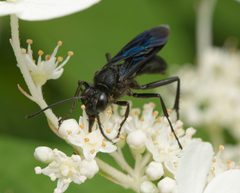
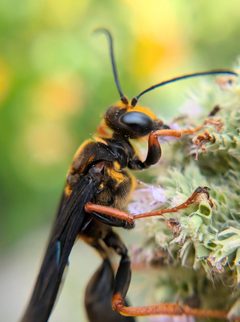
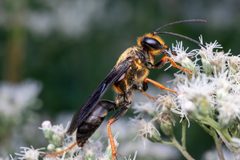
2Sphecini is a tribe of digger wasps within the Sphecidae, first described by Latreille in 1802. Members are characterized by thread-waisted bodies and solitary nesting . The tribe includes such as Priononyx and Sphex, which are known for constructing burrows in soil or sand and provisioning them with paralyzed prey for their larvae.
Pronunciation
How to pronounce Sphecini: /ˈsfɛsɪnaɪ/
These audio files are automatically generated. While they are not always 100% accurate, they are a good starting point.
Identification
Sphecini can be distinguished from related sphecid tribes by the combination of a pronounced thread-waisted petiole, elongated body form, and typically robust adapted for prey capture. The forewing has a distinctive venation pattern with a closed marginal . Members lack the metallic coloration common in some other sphecid groups and generally exhibit black, brown, or reddish coloration with limited pale markings.
Images
Habitat
Sphecini occupy open, sunny environments including sandy areas, bare ground, and vertical earthen banks. They require well-drained substrates suitable for nest excavation. Some , such as Priononyx, are associated with riparian zones and moist soils near water sources.
Distribution
distribution with representatives on all continents except Antarctica. Highest diversity occurs in tropical and warm temperate regions.
Seasonality
activity peaks during warm months, with most active from late spring through summer. timing varies by latitude and local climate conditions.
Diet
feed on nectar from flowers. Larvae are , provisioned with paralyzed prey captured by females.
Life Cycle
Solitary nesting with . Females excavate burrows, capture and paralyze prey (typically Orthoptera or other insects), deposit an on the prey, and seal the . Larvae develop through multiple instars, pupate within the nest, and emerge as the following season. No social are present.
Behavior
Females exhibit stereotyped prey transport , carrying paralyzed prey to nest entrances using and legs. Nest construction involves excavation of main burrows with multiple lateral . Males patrol nesting seeking mates. Some demonstrate site fidelity, returning to previously used nesting areas.
Ecological Role
that regulate of orthopterans and other insects. Pollination services through nectar feeding. Burrowing activity contributes to soil aeration and nutrient mixing.
Human Relevance
Generally beneficial due to on pest insects such as grasshoppers. Rarely sting humans unless handled. Occasionally considered nuisance when nesting in high densities in recreational areas.
Similar Taxa
- AmmophiliniAlso thread-waisted sphecids, but Ammophilini typically have more slender bodies, different wing venation with reduced second submarginal , and specialize on Lepidoptera larvae rather than Orthoptera
- SceliphroniniConstruct mud nests rather than burrows in soil; have shorter petiole and different prey preferences, primarily spiders
More Details
Taxonomic Note
The classification of Sphecidae has undergone significant revision. Historically broad definitions included many groups now placed in Crabronidae. Sphecini in the strict sense comprises with specific morphological and behavioral characteristics including the closed marginal and orthopteran prey specialization in many lineages.