
Gastrosericina
André, 1886
Genus Guides
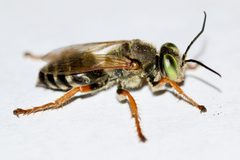
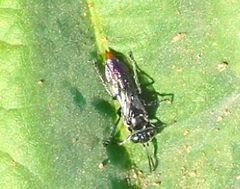
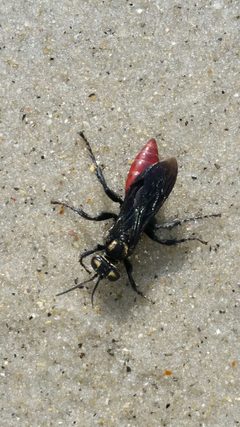
3- Larropsis(square-headed wasps)
- Tachysphex(square-headed wasps)
- Tachytes(green-eyed wasps)
Gastrosericina is a subtribe of solitary within the Crabronidae, tribe Larrini. First described by André in 1886, this group comprises digger wasps that primarily prey on Orthoptera (grasshoppers and crickets). The subtribe includes several distributed across multiple continents.
Pronunciation
How to pronounce Gastrosericina: //ˌɡæstrəˈsɛrɪsɪnə//
These audio files are automatically generated. While they are not always 100% accurate, they are a good starting point.
Identification
Members of Gastrosericina can be distinguished from other Larrini subtribes by morphological features of the mesosoma and wing venation. They possess a characteristic pronotal structure and forewing with reduced or modified venation compared to related subtribes. Females typically exhibit modified hind legs adapted for digging and prey transport.
Images
Habitat
within Gastrosericina inhabit open, sandy or loose soil environments including riverbanks, coastal dunes, grasslands, and disturbed areas. They require exposed ground for nest excavation and proximity to areas supporting their orthopteran prey.
Distribution
The subtribe has a broad distribution spanning the Palearctic, Afrotropical, Oriental, and Australian regions. Individual show varying geographic ranges, with some restricted to specific continents while others are more widespread.
Seasonality
activity generally coincides with the availability of orthopteran prey, typically during warm months in temperate regions and year-round in tropical areas. Peak varies by and latitude.
Diet
Larvae are provisioned with paralyzed Orthoptera, primarily grasshoppers (Acrididae) and crickets (Gryllidae). feed on nectar from flowers.
Life Cycle
Females excavate burrows in soil and provision individual with one or more paralyzed orthopteran prey items. An is laid on the prey, and the larva consumes the provisioned food before pupating. Development time varies with temperature and prey size.
Behavior
Females hunt actively for orthopteran prey, paralyzing victims with a sting and transporting them to the nest. Some carry prey using their ; others drag prey or fly with smaller victims. Males patrol nesting areas seeking females.
Ecological Role
As of Orthoptera, Gastrosericina contribute to of grasshoppers and crickets. They serve as prey for various vertebrate and predators and may influence local orthopteran structure.
Human Relevance
Some may provide incidental of pest grasshoppers in agricultural areas. They are not aggressive toward humans and stings are rare, occurring only if females are handled.
Similar Taxa
- LarrinaAnother subtribe within Larrini; distinguished by prey type (Larrina primarily hunt spiders) and associated morphological adaptations of the legs and
- MiscophinaSubtribe of Crabronidae often found in similar ; distinguished by different prey preferences and nest architecture
More Details
Systematic History
The subtribe has undergone taxonomic revision, with some formerly placed in Gastrosericina reassigned to other subtribes based on phylogenetic analyses. Current composition includes genera such as Tachysphex and related .