
Stizus brevipennis
Walsh, 1869
Stizus brevipennis is a of sand wasp in the Crabronidae (formerly placed in Bembicidae). It was described by Walsh in 1869 and is found in North America. The species has been documented in at least 128 observations on iNaturalist and has been collected in fermenting traps in Missouri.
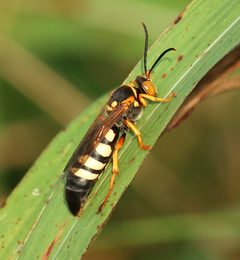
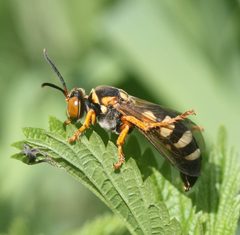
Pronunciation
How to pronounce Stizus brevipennis: /ˈstaɪ.zəs ˌbrɛ.vɪˈpɛn.nɪs/
These audio files are automatically generated. While they are not always 100% accurate, they are a good starting point.
Images
Distribution
North America. The has been specifically recorded in Missouri, where it was collected in fermenting traps placed at the interface between dry post-oak woodland and dolomite glade .
Behavior
Has been observed to be attracted to molasses/beer fermenting traps, suggesting or activity patterns. Two individuals were collected in such traps in Missouri alongside other Crabronidae and Pompiliidae .
Similar Taxa
- Sphecius speciosusBoth are large Crabronidae attracted to fermenting traps; however, S. speciosus (cicada killer) is notably larger and has distinctive coloration and prey specialization on cicadas.
- Stizus texanusCongeneric found in the same geographic region; distinguished by differences in wing venation and body proportions.
- Stizus occidentalisAnother North American ; S. brevipennis can be distinguished by its relatively shorter wings as indicated by its specific epithet.
More Details
Taxonomic placement
While historically placed in Bembicidae (or Nyssonidae), modern classifications place Stizus brevipennis in family Crabronidae based on phylogenetic studies. The Stizus belongs to tribe Stizini within Bembicinae.
Collection method
The was collected using open-top bucket traps baited with molasses/beer mixture (one part molasses, one part beer, nine parts water with yeast), demonstrating attraction to fermenting substrates.