
Stizina
A. Costa, 1859
Genus Guides
3- Bembecinus(sand wasp)
- Stizoides
- Stizus(sand wasps)
Stizina is a subtribe of sand wasps within tribe Bembicini, Crabronidae. The subtribe is distinguished primarily by distinctive wing venation patterns. It includes the large Stizus, which superficially resembles cicada-killer wasps (Sphecius), and the cleptoparasitic genus Stizoides. The subtribe also contains Bembecinus, a genus of small to medium-sized sand wasps with distinctive structure and .
Pronunciation
How to pronounce Stizina: /ˈstɪzɪnə/
These audio files are automatically generated. While they are not always 100% accurate, they are a good starting point.
Identification
Distinguished from other subtribes in Bembicini primarily by wing venation features. The or nearly petiolate second submarginal in the front wing is a key character. Bembecinus can be separated from similar by the distinctive structure: strongly convergent ventrally and strongly divergent dorsally. Stizus is distinguished from the superficially similar Sphecius (Spheciina) by subtribe-level wing venation characters. Stizoides is identified by its cleptoparasitic lifestyle in nests of other crabronids.
Images
Appearance
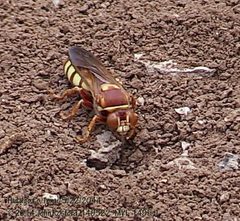
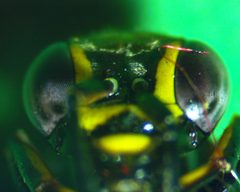
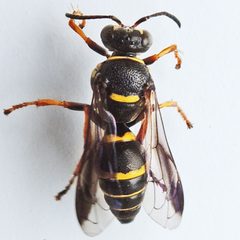
Members range from small to large in size. Stizus includes large that superficially resemble cicada-killer wasps. Genus Bembecinus comprises small wasps (8-10 mm in some North American , with variation across species). Key diagnostic features include wing venation: specifically, the second submarginal in the front wing is or nearly so. In Bembecinus, are strongly convergent at the bottom of the and strongly divergent at the top of the . Males of some Bembecinus species possess short tarsal rakes of spines on their front feet.
Habitat
Sandy substrates are required for nesting. Bembecinus excavates burrows in sand, with females often nesting in small areas creating loose . Vegetation near nesting areas provides sites for sleeping clusters.
Distribution
Worldwide distribution across all continents except Antarctica. Bembecinus: approximately 190 worldwide; 10 species in North America north of Mexico, found across most of the continent.
Seasonality
Active during warm periods; Bembecinus has been observed active on extremely hot days. Sleeping clusters of Bembecinus vary in composition seasonally: all males early in season, all females late in season, though this varies by and geography.
Host Associations
- Cicadellidae - Bembecinus hunts leafhoppers as food for larvae
- related leafhopper families - Bembecinus prey
- Crabronidae - Stizoides are in nests of other crabronids
Life Cycle
Bembecinus: female excavates burrow in sand, lays single in empty at burrow end. Practices : brings prey to larva on as-needed basis rather than stockpiling. Recorded prey delivery ranges from 71 to 757 items per nest. Burrow sealed permanently at or before larva enters pre-pupal stage. Female then initiates new nest. Males of some Bembecinus dig to reach pre-emergent virgin females.
Behavior
Bembecinus females show strong nest fidelity, returning to continue burrow excavation despite disturbance. Highly gregarious nesting: multiple females may nest in small areas. of larvae. Both sexes form sleeping clusters— on twigs, stems, or foliage near nesting areas. Males are highly competitive for mates, with physical fighting over females including attempts to dislodge coupled males. Some males dig for pre-emergent females.
Ecological Role
of leafhoppers (Cicadellidae), potentially contributing to of these herbivorous insects. Stizoides acts as , exploiting nest resources of other crabronid . Serves as for nest including velvet ants (Mutillidae) and cuckoo wasps (Chrysididae).
Human Relevance
Minimal direct interaction. Not known to be aggressive toward humans. Activity on extremely hot days may make them noticeable in sandy recreational areas. Gregarious nesting may create localized concentrations in suitable sandy .
Similar Taxa
- BembecinaSubtribe within same tribe Bembicini; Microbembex is close in appearance but differs in wing venation and other characters used to define Stizina
- SpheciinaRelated subtribe containing Sphecius (cicada-killer wasps); Stizus superficially resembles Sphecius but differs in wing venation subtribe characters
- BicyrtesSimilar appearance to Bembecinus; used as initial identification starting point but differs in structure and wing venation
More Details
Nest parasitism
Bembecinus is parasitized by velvet ants (Mutillidae) and cuckoo wasps (Chrysididae). Notably, no fly (Sarcophagidae) have been documented, which is unusual given that satellite flies are common parasites of most other burrowing .
Taxonomic composition
The subtribe includes at least three : Stizus (large ), Stizoides (), and Bembecinus (small to medium sand wasps with ).