
Microbembex
Patton, 1879
sand wasps
Species Guides
2Microbembex is a of sand wasps in the Crabronidae, containing more than 30 described . These solitary are known for nesting in sandy substrates and have been documented primarily in North America. The genus has been the subject of behavioral studies, particularly regarding nest-finding and activity patterns. Some species have been recorded as for velvet ants (Mutillidae).
Pronunciation
How to pronounce Microbembex: /ˌmaɪkroʊˈbɛmbɛks/
These audio files are automatically generated. While they are not always 100% accurate, they are a good starting point.
Identification
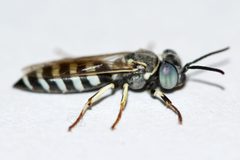
Microbembex are small to medium-sized sand wasps, typically measuring 10-11 mm in body length. They can be distinguished from related by subtle morphological characters; one study noted that Microbembex was superficially similar to Bembecinus but differed in structure and wing venation. Specific identification features for the genus versus other bembicine require examination of detailed morphological characters not fully documented in available sources.
Images
Habitat
Sandy substrates, including sand dunes and beaches. Documented nesting in open, sandy areas in southern Arizona and on Bahamian islands. The shows preference for loose, well-drained soils suitable for burrow excavation.
Distribution
North America, with records from the United States (Arizona, Vermont, Colorado) and the Bahamas. The appears to have a primarily Nearctic distribution, though specific range boundaries for most remain poorly documented.
Host Associations
- Dasymutilla bioculata - Velvet ant known to parasitize Microbembex nests
Life Cycle
Females excavate burrows in sand and provision with prey for larval development. Nesting females bring food to larvae on an as-needed basis. The larva enters a pre-pupal stage before the burrow is sealed permanently.
Behavior
Females are active from approximately 08:30 to 15:30 hours, intermixing hunting, feeding, and nest maintenance. Males defend territories from approximately 09:00 to 12:00 hours, then feed on nectar until retiring to sleeping burrows from 13:00 to 15:00 hours. M. monodonta has been shown to rely exclusively on visual cues when pinpointing nest entrances. Both sexes may gather in sleeping clusters on vegetation near nesting areas.
Ecological Role
As , they likely help regulate of their prey. As for velvet ants and potentially other , they contribute to local complexity. Their burrowing activity may contribute to soil aeration in sandy .
Human Relevance
Generally not considered pests; their stinging capability is not emphasized in available literature. May be encountered by beachgoers and naturalists in sandy .
Similar Taxa
- BembecinusSimilar size and nesting in sandy substrates; distinguished by structure (strongly convergent at bottom of in Bembecinus) and wing venation ( second submarginal in Bembecinus)
- BembixRelated sand wasp in same tribe; generally larger and with different prey preferences
- GlenostictiaCo-occurring bembicine in southern Arizona with which Microbembex has been studied behaviorally
More Details
Taxonomic Note
Microbembex has been classified in Sphecidae in older literature but is currently placed in Crabronidae ( Bembicinae) based on modern phylogenetic treatments.
Research Significance
M. monodonta has become a model organism for studying visual navigation in insects, with demonstrated ability to locate nest entrances using visual landmarks alone.
Sources and further reading
- BugGuide
- Wikipedia
- GBIF taxonomy match
- iNaturalist taxon
- NCBI Taxonomy
- Catalogue of Life
- Bembicid Holdings | Entomology Research Museum
- Bug Eric: Wasp Wednesday: Dasymutilla bioculata
- Bug Eric: Wasp Wednesday: Bembecinus
- The Behavior of Some Bembicine Wasps of Southern Arizona (Hymenoptera: Sphecidae, Microbembex, Glenostictia, Xerostictia)
- The Nesting Behavior of Some Sphecid Wasps of Arizona, including Bembix, Microbembex, and Philanthus
- Activity budgets, habitat use and body size in two coexisting species of sand wasps ( Microbembex: Sphecidae, Hymenoptera)
- Digger wasps Microbembex monodonta SAY (Hymenoptera, Crabronidae) rely exclusively on visual cues when pinpointing their nest entrances.