
Tanaostigmatidae
Ashmead, 1904
Genus Guides
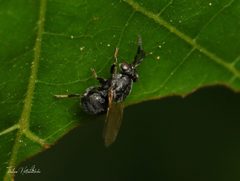
2is a small of chalcidoid wasps comprising approximately 90 in 9 . Unlike most chalcidoids, they are almost exclusively phytophagous rather than , inducing galls in plant stems, leaves, or seeds. The family is primarily distributed in tropical and subtropical regions. Members are typically short, squat with distinctive morphological features including a protruding prepectus and a strongly arched that renders the pronotum nearly vertical.
Pronunciation
How to pronounce Tanaostigmatidae: //ˌtænə.oʊˈstɪɡməˌtɪdeɪ//
These audio files are automatically generated. While they are not always 100% accurate, they are a good starting point.
Identification
Distinguished from other chalcidoid by the combination of a protruding prepectus and strongly arched with nearly vertical pronotum. These features separate them from superficially similar families such as Eupelmidae and Encyrtidae. Differentiated from Tetracampidae by thoracic structure (exact distinctions require detailed examination).
Images
Appearance
Short, squat body form. Protruding prepectus is a key diagnostic feature. strongly arched, causing pronotum to be nearly vertical. As chalcidoid wasps, they possess reduced wing venation typical of the superfamily.
Habitat
Associated with plants in which they induce galls; includes agricultural areas with cultivated legumes (e.g., pigeon pea fields), natural vegetation with wild host plants such as Atylosia and Rhynchosia , and forested areas with gall-forming hosts like Calliandra brevipes and Machaerium acutifolium.
Distribution
Primarily tropical and subtropical regions. Documented from India (Andhra Pradesh, widespread in farmers' fields), Brazil (São Paulo state, among others), and presumably throughout tropical and subtropical zones given the 's plant associations.
Diet
Phytophagous; larvae feed within plant tissues. Specific feeding documented in seeds/pods of pigeon pea (Cajanus cajan), fruits of Machaerium acutifolium, and within galls induced on Calliandra brevipes. Some also associated with weedy including Atylosia spp. and Rhynchosia spp.
Host Associations
- Cajanus cajan (pigeon pea) - larval larvae feed in pods; can reach pest status in agricultural settings
- Atylosia spp. - wild plants
- Rhynchosia spp. - wild plants
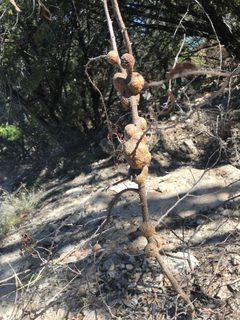
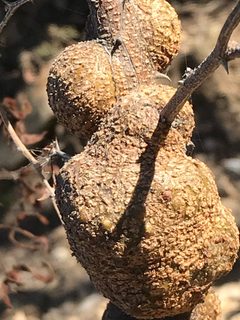
- Calliandra brevipes - gall induces globose and galls on stems
- Machaerium acutifolium - larval reared from fruits
Life Cycle
Larvae develop within plant tissues—specifically in pods, seeds, fruits, or galls depending on . emerge from these plant structures. Specific details of -laying, larval instars, and are not well documented in available sources.
Behavior
Gall induction is the primary documented ; larvae feeding within plant tissues causes characteristic gall formation on stems, leaves, or seeds. Under conditions of abundant wild , extended host availability, and reduced pressure (e.g., from use), can reach abnormally high densities.
Ecological Role
Phytophagous gall-formers that manipulate plant primary and secondary metabolism for larval nutrition. control appears dependent on pressure; reduced can lead to pest . Some have potential to become agricultural pests, particularly in legume crops.
Human Relevance
Tanaostigmodes cajaninae has reached pest status on research farms in India, with potential to become a serious pest of pigeon pea . Control measures are complicated by use that reduces natural without effectively controlling the pest. The 's gall-forming may have unrecognized impacts on native vegetation in introduced ranges.
Similar Taxa
- EupelmidaeShares enlarged acropleuron structure; differentiated by thoracic and lack of the protruding prepectus and strongly arched characteristic of
- EncyrtidaeSimilar acropleural structure; primarily rather than phytophagous, and lacks the distinctive pronotum/ configuration of
- TetracampidaeAnother small chalcidoid ; distinguished by wing venation and thoracic structure details (exact differences require microscopic examination)
More Details
Taxonomic relationships
Phylogenetic placement within Chalcidoidea has been debated. The extinct Leptoomus from Baltic amber shows affinities with , Eupelmidae, and Encyrtidae based on acropleural structure. Some classifications include Cynipencyrtus within Tanaostigmatidae sensu lato, though relationships remain unresolved.
Biochemical impact on hosts
Gall induction by Tanaostigmodes causes measurable changes in plant metabolism, including altered flavonoid content, specific polypeptide production, and modified profiles in gall tissues compared to non-galled tissue.
Sources and further reading
- BugGuide
- Wikipedia
- GBIF taxonomy match
- iNaturalist taxon
- NCBI Taxonomy
- Catalogue of Life
- Hymenoptera | Beetles In The Bush | Page 5
- Tanaostigmodes cajaninae LaSalle sp. n. (Hymenoptera: Tanaostigmatidae), a potential pest of pigeon pea in India
- A new species of Tanaostigmodes Ashmead, 1896 (Hymenoptera: Tanaostigmatidae) from Brazil associated with Machaerium acutifolium Voguel, 1837 (Fabaceae)
- Differential biochemical responses of Calliandra brevipes (Fabaceae, Mimosoidae) to galling behaviour by Tanaostigmodes ringueleti and T. mecanga (Hymenoptera, Tanaostigmatidae)
- Description of Leptoomus janzeni, n. gen. and n. sp. (Hymenoptera: Chalcidoidea) from Baltic amber, and discussion of its relationships and classification relative to Eupelmidae, Tanaostigmatidae and Encyrtidae