
Tetracampidae
Förster, 1856
Genus Guides
1is a small of parasitic within the superfamily Chalcidoidea, comprising approximately 44 in 15 . These wasps are of phytophagous insects, with most known being flies (Diptera), particularly those that mine in plants. Some species also parasitize of (Diprionidae) and beetles (Chrysomelidae, Cassididae). The family is predominantly distributed in the Old World, with species almost entirely absent from the New World. The of most species remains poorly studied.
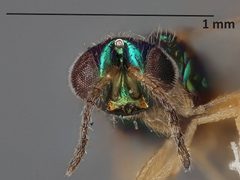
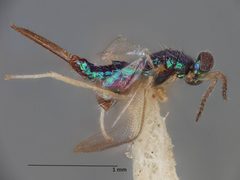
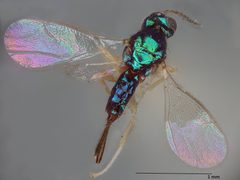
Pronunciation
How to pronounce Tetracampidae: /tɛtrəˈkæmpɪdi/
These audio files are automatically generated. While they are not always 100% accurate, they are a good starting point.
Identification
are small chalcidoid wasps that can be distinguished from other Chalcidoidea by specific morphological features, though detailed diagnostic characters require examination. They are most reliably identified by their association with particular groups and geographic distribution patterns.
Images
Habitat
are determined by those of their , which include plant-mining flies and other phytophagous insects in various terrestrial environments. Specific microhabitat preferences are poorly documented for most .
Distribution
Almost entirely absent from the New World; distributed primarily in the Old World including Europe, Africa, Madagascar, and Asia. Distribution records include Denmark (DK), Norway (NO), and Sweden (SE).
Diet
of phytophagous insects. Most known are flies (Diptera), particularly Agromyzidae and other plant-mining flies. European of Dipriocampe are endoparasitoids of of diprionid (Diprionidae). British species of Foersterella are endoparasitoids of eggs of Cassida spp. (Coleoptera: Cassididae). In Africa and Madagascar, members are egg parasitoids of beetles (Chrysomelidae) and sawflies (Diprionidae), or larval parasitoids of flies (Agromyzidae).
Host Associations
- Diptera - primary primarily plant-mining flies including Agromyzidae
- Diprionidae - of
- Chrysomelidae - of leaf beetles
- Cassididae - endoparasitoids of tortoise beetle
Ecological Role
agents of phytophagous insects, particularly plant-feeding flies and beetles. One , Dipriocampe diprioni, was introduced into Canada from Europe for biological control of diprionid pests but did not become established.
Human Relevance
Limited direct human relevance. Some have been investigated for potential. Dipriocampe diprioni was introduced to Canada as a biocontrol agent for diprionid pests but failed to establish.
Similar Taxa
- Other Chalcidoidea families can be confused with other small chalcidoid ; morphological examination is required for definitive identification. The author notes inability to distinguish Tetracampidae from Tanaostigmatidae based on field characteristics.