
Alaptus eriococci
Girault, 1908
Fairyfly
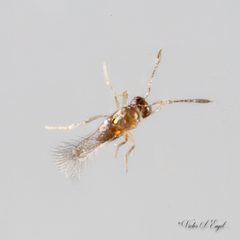
Alaptus eriococci Girault, 1908 is a of fairyfly in the Mymaridae (Hymenoptera: Chalcidoidea). The species was described by Girault in 1908 and a lectotype was designated by Triapitsyn in 2017 during a comprehensive revision of the Holarctic Alaptus fauna. Like other members of this , it is an , though specific records for this species remain limited in the available literature. The species name "eriococci" suggests an association with scale insects in the family Eriococcidae.
Pronunciation
How to pronounce Alaptus eriococci: /ˈælæptəs ˌɛriˈɒkɒsaɪ/
These audio files are automatically generated. While they are not always 100% accurate, they are a good starting point.
Identification
Alaptus eriococci can be distinguished from other Alaptus based on morphological characters detailed in Triapitsyn's 2017 revision. The Alaptus is characterized by reduced wing venation, with forewings typically having a closed marginal and reduced setation. Specific diagnostic features for A. eriococci include details of antennal structure and body proportions that separate it from such as A. fusculus and A. minimus. Identification to species level requires examination of type material or comparison with the lectotype designated by Triapitsyn (2017).
Images
Distribution
Known from California, USA and Rio de Janeiro, Brazil based on GBIF distribution records. The was described from material collected in the early 20th century, with the lectotype designated from existing museum specimens.
Host Associations
- Eriococcidae - The specific epithet 'eriococci' indicates association with this insect , though specific records are not confirmed in the provided sources.
Similar Taxa
- Alaptus fusculusSimilar body size and wing venation pattern; distinguished by antennal proportions and body coloration.
- Alaptus minimusOverlapping geographic distribution in some regions; A. eriococci differs in details of capsule and mesosoma structure.
- Alaptus pallidicornisSympatric in some Holarctic localities; requires careful examination of claval and funicular segments for separation.
Sources and further reading
- BugGuide
- GBIF taxonomy match
- iNaturalist taxon
- Catalogue of Life
- Encyrtid Holdings | Entomology Research Museum
- Publications - AgriLife Extension Entomology
- Publications | Entomology Research Museum
- Eriococcidae Archives - Entomology Today
- Nasty scale insects spell trouble for American beech trees: Beech bark scale, Cryptococcus fagisuga — Bug of the Week
- New Species of Gall-Inducing Insect Found in Australia
- Revision of Alaptus (Hymenoptera: Mymaridae) in the Holarctic region, with taxonomic notes on some extralimital species