
Dicopomorpha
Ogloblin, 1955
fairyfly
Species Guides
1Dicopomorpha is a of fairyflies in the Mymaridae, established by Ogloblin in 1955. The genus includes ten described and is notable for containing some of the smallest known insects. The wingless male of Dicopomorpha echmepterygis holds the record as the smallest known adult insect at only 130 μm in length. Like other mymarids, these are , though specific associations remain largely unknown due to their minute size and cryptic .
Pronunciation
How to pronounce Dicopomorpha: //daɪˌkoʊpoʊˈmɔrfə//
These audio files are automatically generated. While they are not always 100% accurate, they are a good starting point.
Identification
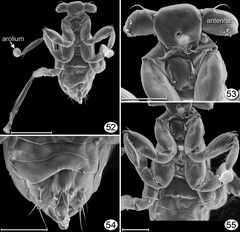
Dicopomorpha are among the most minute insects known, with body lengths typically below 250 μm. The can be distinguished from other mymarid genera by detailed morphological features of the , wings, and body proportions, though definitive identification requires slide-mounted specimens and microscopic examination. The reduced wing surface and relatively long setae are characteristic of minute fairyflies and likely serve an aerodynamic function. Wingless males occur in some species.
Images
Distribution
The has been recorded from multiple regions including the Russian Far East (Primorskii Krai), Korea, and other localities. Specific distribution data for individual varies, with D. koreana described from Korea and other species recorded from various localities in the Palaearctic region.
Ecological Role
As , Dicopomorpha likely contribute to the natural control of of their unknown insects. Their extremely small size allows them to exploit egg hosts that may be inaccessible to larger parasitoids.
Similar Taxa
- KikikiBoth contain extremely small fairyflies; Kikiki huna was the smallest known winged insect (155 μm) before the discovery of even smaller Dicopomorpha . The two genera are sister and share reduced wing and minute body size.
More Details
Size records
Dicopomorpha echmepterygis contains the smallest known insect, with wingless males measuring only 130 μm in body length. This surpasses the previous record held by Kikiki huna (155 μm), another mymarid .
Taxonomic history
The was established by A.A. Ogloblin in 1955. A comprehensive review of the genus along with Arescon was published by Triapitsyn & Berezovskiy in 2003 as part of their work on the Mymaridae of Primorskii Krai.
Sources and further reading
- BugGuide
- Wikipedia
- GBIF taxonomy match
- iNaturalist taxon
- NCBI Taxonomy
- Catalogue of Life
- dicopomorpha_koreana_triapitsyn_berezovskiy_ht_ucrc_ent_23316_body.jpg | Entomology Research Museum
- Primary Type List | Entomology Research Museum
- Publications | Entomology Research Museum
- Ask the Bug Doctor | Bug Squad
- Uncategorized | Blog - Part 38
- Pensoft blog - Part 143