
Paragaleopsomyia
Girault, 1917
Paragaleopsomyia is a of minute parasitic in the Eulophidae, Tetrastichinae. The genus was described by Girault in 1917. Like other eulophid wasps, members of this genus are likely of other insects, though specific associations remain poorly documented. The genus is known from the Nearctic region.
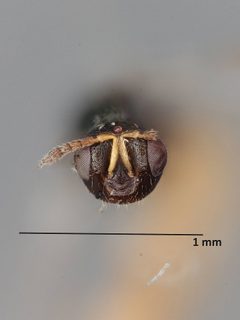
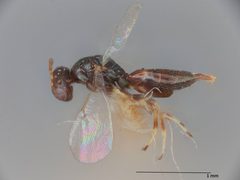
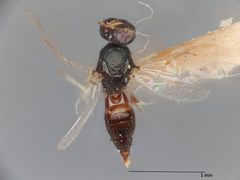
Pronunciation
How to pronounce Paragaleopsomyia: /ˌpærəˌɡæliˌɒpsəˈmaɪə/
These audio files are automatically generated. While they are not always 100% accurate, they are a good starting point.
Identification
Paragaleopsomyia can be distinguished from related eulophid using morphological characters detailed in taxonomic keys to Nearctic eulophid genera. Specific diagnostic features require examination of minute morphological traits visible only under microscopy.
Images
Distribution
Known from the United States (Nearctic region). Distribution records are sparse, with only limited documented occurrences.
Ecological Role
Likely functions as a of other insects, consistent with the ecological role of Eulophidae generally. Specific relationships and ecological impacts are not established.
Similar Taxa
- GaleopsomyiaSimilar name and shared Tetrastichinae; differentiated by morphological characters in taxonomic keys
- Other Tetrastichinae generaAll require microscopic examination and use of specialized keys for accurate identification
More Details
Taxonomic history
The was established by Girault in 1917. It has received limited taxonomic attention since its description, and -level diversity remains poorly characterized.
Data limitations
Only one observation is recorded in iNaturalist, and the is not well represented in public biodiversity databases. This reflects the general difficulty of documenting minute parasitic wasp diversity.