
Eulophus
Geoffroy, 1762
Species Guides
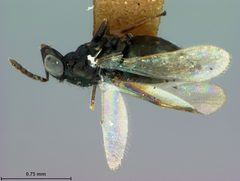
2Eulophus is a of chalcidoid wasps in the Eulophidae. are gregarious ectoparasitoids, primarily attacking lepidopteran larvae. The genus has been extensively studied for its potential, particularly E. pennicornis against the tomato Lacanobia oleracea. larvae feed externally on caterpillars and possess sophisticated host manipulation capabilities including developmental arrest and immune suppression.

Pronunciation
How to pronounce Eulophus: /juːˈloʊfəs/
These audio files are automatically generated. While they are not always 100% accurate, they are a good starting point.
Identification
Eulophus are small chalcidoid wasps, typically 2–5 mm in length. have reduced wing venation characteristic of Eulophidae, with relatively broad wings and short . Larvae are maggot-like, legless, and attach externally to caterpillars. Species-level identification requires examination of antennae structure, mesosoma , and wing venation patterns; molecular markers may be necessary for definitive identification.
Images
Distribution
Widespread across the Holarctic region. Individual distributions vary: E. larvarum occurs in Europe, E. pennicornis has been documented in Europe and studied in laboratory .
Seasonality
Eulophus larvarum exhibits two annually in temperate regions. Spring generation larvae produce female-biased sex ratios due to local mate competition; summer generation shows near-equal sex ratios as become separated during winter.
Diet
Larval stages feed on and tissues; likely feed on nectar and honeydew though specific documentation is limited.
Host Associations
- Lacanobia oleracea - primary tomato ; primary study organism for E. pennicornis
- Lepidoptera larvae - general group for ; broad-leaved tree feeders for E. larvarum
Life Cycle
Eulophus are gregarious ectoparasitoids. Females oviposit multiple on caterpillars. Larvae attach externally and feed on host tissues, completing development on or near the host. Pupal stage occurs in protected locations. Developmental timing varies with host stage and temperature; E. pennicornis completes development in approximately 12 days at laboratory conditions.
Behavior
Eulophus pennicornis preferentially parasitizes or final instar . Females adjust clutch size based on host size. Parasitized hosts exhibit arrested development, reduced feeding (64.7% reduction over 12 days in E. pennicornis), and suppressed immune responses. Larvae release proteins and factors that disrupt host cytoskeleton and suppress responses.
Ecological Role
agent of lepidopteran pests. Eulophus function as regulators of caterpillar populations in natural and agricultural systems. Their manipulation capabilities make them effective biocontrol candidates for greenhouse and field applications.
Human Relevance
Eulophus pennicornis has been investigated as a biocontrol agent for tomato (Lacanobia oleracea) and other noctuid pests in greenhouse systems. Inoculative releases may provide effective pest suppression. Concerns exist regarding potential non-target effects of transgenic plants expressing inhibitors on development.
Similar Taxa
- MethochaAlso ectoparasitoids of tiger larvae; distinguished by association and
- Anthrax (Bombyliidae)Dipteran ectoparasitoids of similar ; distinguished by larval (fly larvae lack capsules, larvae possess distinct head structures)
- TachinidaeDipteran of caterpillars; distinguished by larval features and wing venation
Sources and further reading
- BugGuide
- Wikipedia
- iNaturalist taxon
- NCBI Taxonomy
- Catalogue of Life
- ID Challenge #11 | Beetles In The Bush
- Local Host Adaptation and Use of a Novel Host in the Seed Beetle Megacerus eulophus
- Proteins synthesized and secreted by larvae of the ectoparasitic wasp, Eulophus pennicornis
- Seasonal variation in the reproductive strategy of the parasitic wasp Eulophus larvarum (Hymenoptera: Chalcidoidea: Eulophidae)
- Correction: Local Host Adaptation and Use of a Novel Host in the Seed Beetle Megacerus eulophus
- Venom from the ectoparasitoid wasp Eulophus pennicornis disrupts host ecdysteroid production by regulating host prothoracic gland activity
- Larvae of the ectoparasitic wasp, Eulophus pennicornis, release factors which adversely affect haemocytes of their host, Lacanobia oleracea
- Ability to host regulate determines host choice and reproductive success in the gregarious ectoparasitoid Eulophus pennicornis (Hymenoptera: Eulophidae)
- Influence of host size on the clutch size and developmental success of the gregarious ectoparasitoid Eulophus pennicornis (Nees)(Hymenoptera: Braconidae) attacking larvae of the tomato moth Lacanobia oleracea (L.) (Lepidoptera: Noctuidae)
- The biology of the ectoparasitoid wasp Eulophus pennicornis (Hymenoptera: Eulophidae) on host larvae of the tomato moth, Lacanobia oleracea (Lepidoptera: Noctuidae)
- Parasitism of Lacanobia oleracea (Lepidoptera, noctuidae) by the ectoparasitic wasp Eulophus pennicornis, results in the appearance of a 27 kDa parasitism-specific protein in host plasma
- A venom metalloproteinase from the parasitic wasp Eulophus pennicornis is toxic towards its host, tomato moth ( Lacanobia oleracae )
- Parasitism of Lacanobia oleracea (Lepidoptera) by the ectoparasitoid, Eulophus pennicornis, is associated with a reduction in host haemolymph phenoloxidase activity
- Protease activity in the larval stage of the parasitoid wasp, Eulophus pennicornis (Nees) (Hymenoptera: Eulophidae); effects of protease inhibitors
- Parasitism of Lacanobia oleracea (lepidoptera) by the ectoparasitic wasp, Eulophus pennicornis, disrupts the cytoskeleton of host haemocytes and suppresses encapsulation in vivo
- Transgenic GNA Expressing Potato Plants Augment the Beneficial Biocontrol of Lacanobia Oleracea (Lepidoptera: Noctuidae) by the parasitoid Eulophus Pennicornis (Hymenoptera; Eulophidae)