
Euderomphale
Girault, 1916
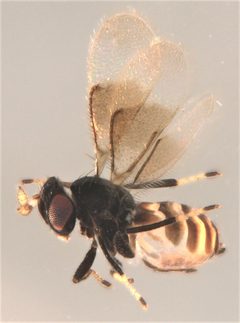
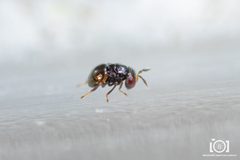
Euderomphale is a of minute in the Eulophidae, first described by Girault in 1916. Members of this genus belong to the Entedoninae, a group characterized by their small size and parasitic lifestyle on other insects. The genus is part of the hyperdiverse chalcidoid wasp radiation, though specific biological details remain poorly documented.
Pronunciation
How to pronounce Euderomphale: /ˌjuː.dɛɹˈɒm.fə.li/
These audio files are automatically generated. While they are not always 100% accurate, they are a good starting point.
Identification
Distinguishing Euderomphale from other eulophid requires examination of morphological characters including segmentation, mesoscutal setation patterns, and wing venation. The genus is placed in Entedoninae based on reduced wing venation and specific tarsal structures. Identification to level typically requires slide-mounted specimens and reference to specialized taxonomic keys for Nearctic eulophids.
Images
Distribution
Documented records include British Columbia (Canada) and Leningrad (Russia), indicating a Holarctic distribution pattern. The sparse record count suggests either genuinely restricted range or, more likely, under-collection due to minute size.
Ecological Role
As members of Eulophidae, in this likely function as of insect , contributing to of their hosts. The specific host range and ecological impact remain undocumented.
Similar Taxa
- Other Entedoninae generaEuderomphale shares reduced wing venation and general body plan with numerous entedonine , requiring careful morphological examination to separate.
- EulophusBoth belong to Eulophidae and share small size and similar general habitus; Euderomphale differs in specific antennal and mesosomal characters.
More Details
Taxonomic history
The was established by Australian entomologist Alexandre Arsène Girault in 1916. Girault was prolific in describing chalcidoid , and many of his genera remain valid but poorly studied.
Data limitations
With only 17 iNaturalist observations and minimal biological documentation, Euderomphale exemplifies the vast number of poorly known hymenopteran . Most likely await description.