Neodusmetia sangwani
(Subba Rao, 1957)
Neodusmetia sangwani is a minute encyrtid native to India, renowned as one of the most successful agents ever deployed. It was introduced to the United States in the 1950s and Brazil in 1967 to combat the Rhodesgrass mealybug (Antonina graminis), a destructive pest of pasture grasses. The exhibits extreme : females are wingless, short-lived, and sedentary, while males are winged. Its introduction saved an estimated $17 million annually in turf management costs in Texas alone.
Pronunciation
How to pronounce Neodusmetia sangwani: /ˌniːoʊdʌsˈmiːʃə sæŋˈɡwɑːniː/
These audio files are automatically generated. While they are not always 100% accurate, they are a good starting point.
Identification
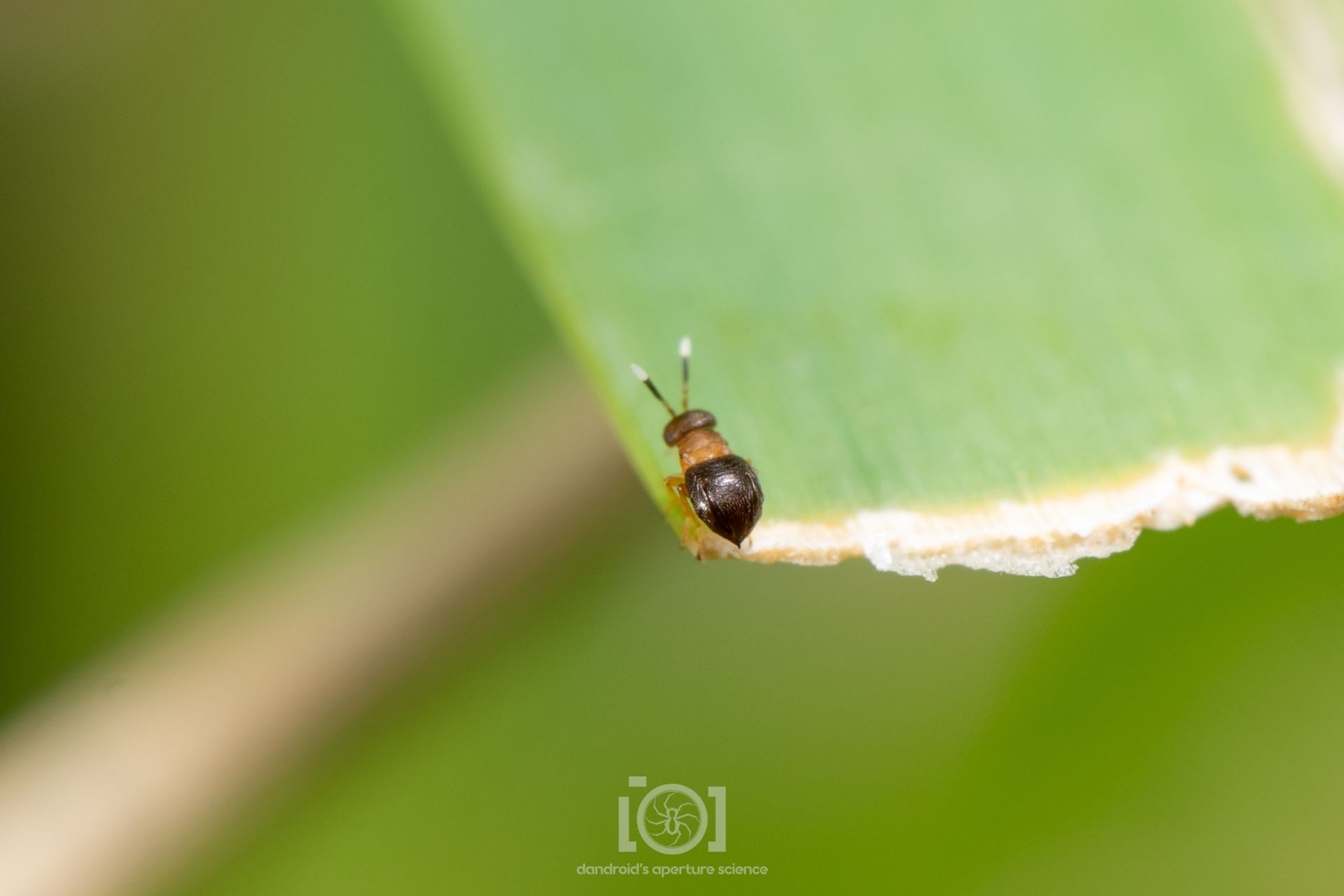
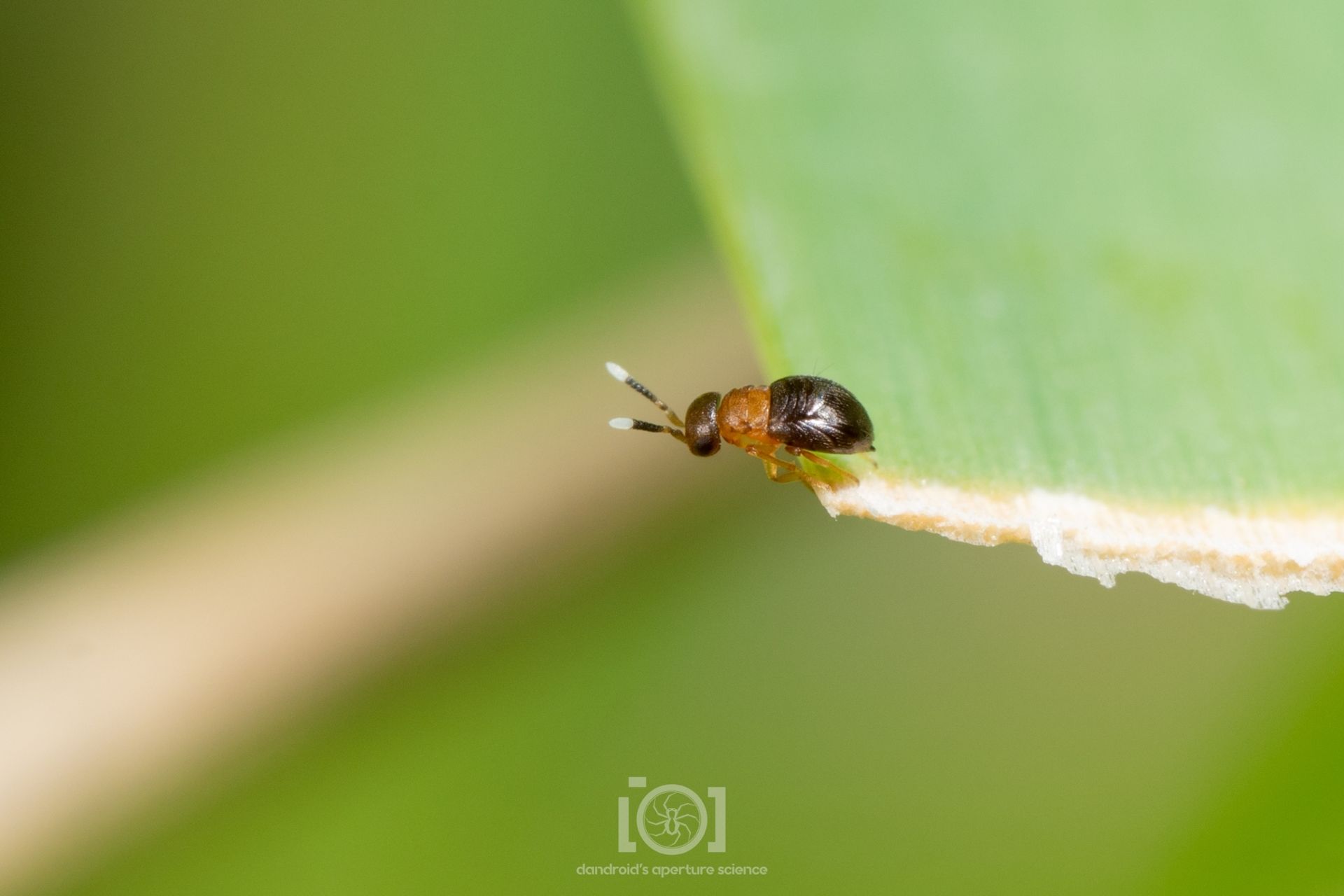
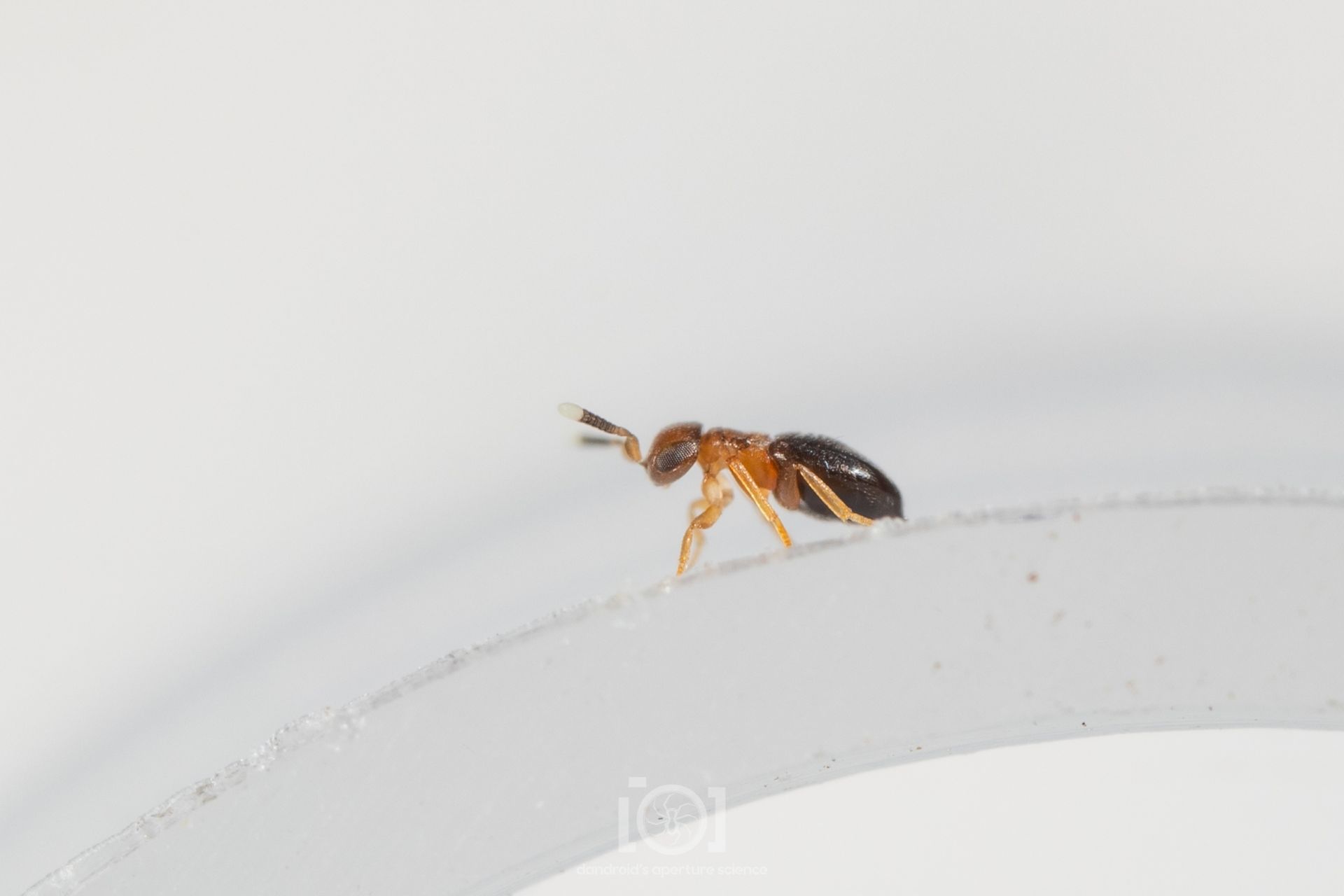
Females are wingless with orange-brown and and dark brown ; males are winged and uniformly dark brown. measure approximately 1 mm in length. is extreme and immediately diagnostic: females lack wings entirely while males possess them. The can be distinguished from other Neodusmetia by association with its specific Antonina graminis and by its documented introduction history in programs.
Images
Habitat
Distribution
Native to India (type locality: Hessarghatta, Bangalore). Introduced and established in the United States (Texas, 1950s; Florida, where it displaced Anagyrus antoninae), Brazil (1967, first in Bahia then São Paulo, Pernambuco, Minas Gerais), Israel, and Hawaii.
Seasonality
continuous under favorable conditions; completes seven more generations annually than its . Development time varies with temperature: 17–20 days at 30°C, 47–56 days at 20°C.
Diet
Host Associations
- Antonina graminis - primary Rhodesgrass mealybug; third-instar nymphs preferred for oviposition
Life Cycle
laid inside third-instar mealybug ; larval and pupal development internal. lifespan extremely brief: 12–48 hours for females. Each female parasitizes approximately 6 and produces about 35 descendants. Sex ratio strongly female-biased (4.1–6.7 females per male).
Behavior
Wingless females exhibit limited , approximately 0.8 km per year under natural conditions. Oviposition is rapid, requiring 2–5 seconds per . Females are sedentary and short-lived, necessitating artificial distribution methods (air-dropping of infested grass sprigs in cardboard boxes) for establishment in new areas.
Ecological Role
Human Relevance
Landmark success in . In Texas, estimated savings of $17 million annually in turf management and projected $177 million boost to cattle production. Total introduction cost under $200,000. Used as model for cost-effective, self-sustaining .
Similar Taxa
- Anagyrus antoninaePreviously used for Rhodesgrass mealybug control in Florida; displaced by N. sangwani after 1950s introduction
- Other Neodusmetia species-level identification requires examination; N. sangwani distinguished by specificity and introduction history