
Diversinervus
Silvestri, 1915
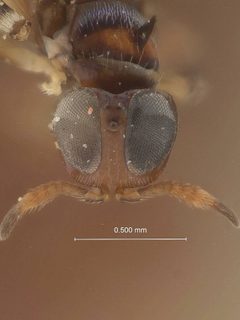
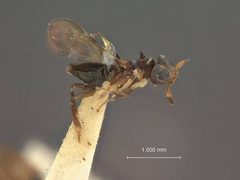
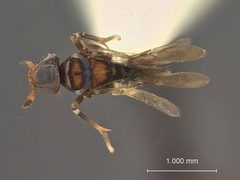
Diversinervus is a of encyrtid in the tribe Cheiloneurini. The genus comprises approximately twelve worldwide, including the notable D. elegans, which has been studied for its potential against scale insects. Species in this genus are endoparasitoids, developing within their . The genus was established by Silvestri in 1915 and has been the subject of recent research on venom biochemistry and viral associations.
Pronunciation
How to pronounce Diversinervus: //dɪˌvɜrsɪˈnɜrvəs//
These audio files are automatically generated. While they are not always 100% accurate, they are a good starting point.
Identification
Members of Diversinervus can be distinguished within the Cheiloneurini by features of the and wing venation, though specific diagnostic characters require examination of type material. The is closely related to other Cheiloneurini genera such as Cheiloneurus and Cheiloneuromyia.
Images
Distribution
recorded from Australia (New South Wales, Queensland), the Americas (Mexico, Colombia, California), and other regions where introductions have occurred.
Host Associations
- Coccus spp. (Hemiptera: Coccidae) - associated with Citrus
- Parasaissetia nigra (Hemiptera: Coccidae) -
- Saissetia oleae (Hemiptera: Coccidae) -
Ecological Role
Endoparasitoid of soft scale insects (Coccidae), contributing to biological regulation of .
Human Relevance
Diversinervus elegans has been imported and studied as a agent for lecaniine scale insects in California citrus and other agricultural systems.
Similar Taxa
- CheiloneurusBoth belong to tribe Cheiloneurini and share similar body plan and associations; distinguished by antennal structure and wing venation details
- CheiloneuromyiaCongeneric tribe member with overlapping morphological features; requires detailed examination of genitalic and antennal characters for separation
Sources and further reading
- BugGuide
- GBIF taxonomy match
- iNaturalist taxon
- NCBI Taxonomy
- Catalogue of Life
- Encyrtid Holdings | Entomology Research Museum
- Unraveling the venom components of an encyrtid endoparasitoid wasp Diversinervus elegans
- Registro de Diversinervus elegans Silvestri (Hymenoptera: Encyrtidae) para la ciudad de Bogotá, Colombia
- Genome sequence of a novel member of the order Picornavirales from the endoparasitoid wasp Diversinervus elegans
- The Biology and Effectiveness of Diversinervus elegans (Encyrtidae: Hymenoptera), an Imported Parasite of Lecaniine Scale Insects in California1