
Pleistodontes froggatti
Mayr, 1906
Moreton Bay fig wasp
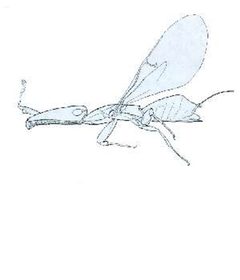
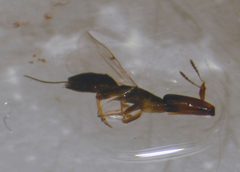
Pleistodontes froggatti is a small native to Australia with an obligate mutualistic relationship with the Moreton Bay fig (Ficus macrophylla). The was deliberately introduced to Hawaii in 1921 to support fig , and established in New Zealand by 1993 through long-distance or accidental transport. females are approximately 3 mm in length, while males are smaller at 1.5 mm and exhibit distinct coloration. The cannot reproduce outside the syconia of its specific fig.

Pronunciation
How to pronounce Pleistodontes froggatti: /ˌplaɪstəˈdɒntiːz ˈfrɒɡæti/
These audio files are automatically generated. While they are not always 100% accurate, they are a good starting point.
Identification
Distinguished from other Pleistodontes by association with Ficus macrophylla ; females identified by 3.0–3.4 mm length with black-brown-reddish brown coloration, males by 1.5 mm length with yellow-orange bodies. Specific identification requires examination of morphological features not detailed in available sources.
Images
Habitat
Associated with the syconia (fig fruits) of Ficus macrophylla; occurs wherever trees grow, including natural forests, urban plantings, and cultivated landscapes.
Distribution
Native to Australia: southeast Queensland, eastern New South Wales, and Lord Howe Island. Introduced to Hawaii (deliberately, 1921; recorded from Hawaiʻi, Lānaʻi, Kauaʻi, Oʻahu, Molokaʻi, and Midway Atoll; presumed on Maui). Established in New Zealand (first recorded 1993, now widespread).
Host Associations
- Ficus macrophylla - obligate mutualismExclusive ; pollinates fig and reproduces only within its syconia
Life Cycle
occurs exclusively within the syconia of Ficus macrophylla. females live 2–3 days. Specific details of , larval, and pupal stages not documented in available sources.
Behavior
females disperse to locate receptive fig syconia; long-distance has been observed across 3,000 km of open ocean to New Zealand. Dispersal likely aided by air currents; hitchhiking on aircraft also possible.
Ecological Role
Obligate of Ficus macrophylla; mutualism enables fig and seed production. In New Zealand, arrival led to prolific fruit production with small seeds adapted for bird , potentially altering local dynamics.
Human Relevance
Deliberately introduced to Hawaii in 1921 by Maui Pineapple Company to support Ficus macrophylla . Spread in New Zealand facilitated by widespread urban planting of figs. No documented negative economic or health impacts.
Similar Taxa
- Pleistodontes imperialisHistorical misidentification; P. froggatti was initially described under this name by Froggatt in 1901 before Mayr's 1906 re-description
More Details
Etymology
Specific epithet 'froggatti' honors Australian entomologist Walter Wilson Froggatt, who provided the first biological account of the in 1901.
Dispersal capacity
Long-distance of New Zealand (3,000 km from Australia) demonstrates exceptional ability; meteorological analysis indicates approximately 21 days per year with favorable wind conditions for 1–3 day crossing.