
Agaoninae
Walker, 1846
pollinating fig wasps
Genus Guides
3- Blastophaga(fig wasps)
- Pegoscapus
- Pleistodontes
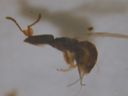
Agaoninae is a of pollinating fig wasps within the Agaonidae. Members are obligate mutualists of Ficus , developing their entire larval stage inside fig fruits. The subfamily exhibits remarkable morphological stasis, with fossil forms from the Eocene and Miocene nearly identical to modern representatives. Some lineages, such as the proposed Hexapus group, retain ancestral traits including females with two mandibular appendages and hexapodous males with functional mid-legs.

Pronunciation
How to pronounce Agaoninae: /ˈæɡəˌɒnɪniː/
These audio files are automatically generated. While they are not always 100% accurate, they are a good starting point.
Identification
Females possess specialized antennal including multiporous placoid sensilla and basiconic sensilla adapted for olfactory detection of figs. Males exhibit reduced wing and development, with some lineages showing distinct leg reduction (tetrapodous) versus retention of functional mid-legs (hexapodous). The presence of two mandibular appendages in females versus one distinguishes certain ancestral clades from more derived Tetrapus s.s. lineages.
Images
Habitat
Develops exclusively within the syconia (fig fruits) of Ficus . Associated with Neotropical fig species of subsection Petenenses (section Pharmacosycea) for certain lineages.
Distribution
Worldwide distribution coinciding with Ficus range; presence in Neotropical region, especially South America, documented for Hexapus lineage. Southern Gondwanaland origin hypothesized for some clades.
Diet
Phytophagous; larvae feed on tissues within developing fig fruits. use olfaction primarily to locate fig trees.
Host Associations
- Ficus L. - obligate mutualist of fig trees; larval development occurs within fig syconia
- Ficus crassivenosa - obligate mutualist for Hexapus lineage
Life Cycle
Complete with larval development entirely within fig syconia. Females emerge, mate with males inside the fig, then disperse to locate new figs. Males typically remain within natal fig and exhibit reduced .
Behavior
Uses olfaction as primary mechanism for location, mediated by diverse antennal including chemoreceptive multiporous placoid and basiconic types. Exhibits obligate mutualism with Ficus hosts: pollinate fig flowers while figs provide larval development sites and pollen/ovule resources.
Ecological Role
Essential of Ficus ; maintains obligate mutualism that enables fig . Serves as food source for fig-associated and .
Similar Taxa
- TetrapusiinaeAlso pollinating fig wasps formerly placed within Agaonidae; distinguished by different associations and morphological features
- KradibiinaeAdditional pollinating ; Agaoninae distinguished by specific antennal patterns and relationships
- Tetrapus s.s.Sister clade within Agaoninae; distinguished by females with one mandibular appendage and tetrapodous males with reduced non-functional mid-legs versus two mandibular appendages and hexapodous males in Hexapus
More Details
Morphological stasis
Fossil evidence from Eocene and Miocene deposits shows Agaoninae forms nearly identical to modern , indicating exceptional evolutionary stability in the pollinating over geologic time.
Living fossil status
The Hexapus lineage has been proposed as a living fossil based on retention of ancestral morphological features (two mandibular appendages in females, hexapodous males) matching Early Miocene (Burdigalian) amber fossils from the Dominican Republic (T. apopnus and T. delclosi).
Antennal ultrastructure
Detailed studies of Ceratosolen solmsi marchali have identified 13 distinct antennal types: multiporous placoid sensilla (types 1 and 2), basiconic sensilla (types 1 and 2), basiconic peg sensilla, sensilla chaetica (types 1–3), sensilla trichodea, sensilla coeloconica (types 1–3), and sensillum obscurum. Five types are confirmed ; others function in mechanoreception, thermo/hygroreception, or pressure detection.
Sources and further reading
- BugGuide
- iNaturalist taxon
- NCBI Taxonomy
- Catalogue of Life
- Ultrastructure of antennal sensilla of female Ceratosolen solmsi marchali (Hymenoptera: Chalcidoidea: Agaonidae: Agaoninae)
- A living fossil fig wasp (Hymenoptera, Agaoninae) developing in extant Neotropical fig species (Moraceae: Ficus, section Pharmacosycea)