
Pleistodontes imperialis
Saunders, 1882
Port Jackson Fig Wasp
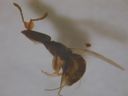
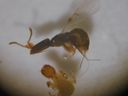
Pleistodontes imperialis is a native to Australia that maintains an obligate mutualism with Ficus rubiginosa (Port Jackson fig), serving as its exclusive . It is the type of the Pleistodontes. The species has been introduced outside its native range through the ornamental planting of its figs in Mediterranean urban , with confirmed records from Greece and Cyprus. In its introduced range, it has demonstrated host-switching , also developing in Ficus watkinsiana figs despite this species having a different native pollinator.
Pronunciation
How to pronounce Pleistodontes imperialis: //ˌplaɪ.stoʊˈdɒn.tiːz ˌɪm.pəˈraɪə.lɪs//
These audio files are automatically generated. While they are not always 100% accurate, they are a good starting point.
Images
Habitat
Native range: associated with Ficus rubiginosa in Australia. Introduced range: urban and ornamental plantings in the Mediterranean region, specifically Greece and Cyprus.
Distribution
Native to Australia. Introduced to Mediterranean region with confirmed records from Greece (first record) and Cyprus. GBIF records indicate presence in Hawaii, US.
Host Associations
- Ficus rubiginosa - obligate mutualismPrimary native ; -specific
- Ficus watkinsiana - alternative in introduced range-switching observed in Greece; normally pollinated by Pleistodontes nigriventris in native range
Life Cycle
Develops within figs of plants. Specific developmental stages and timing not documented in available sources.
Behavior
Demonstrates -switching in introduced range, utilizing Ficus watkinsiana as an alternative host despite this fig having a different native .
Ecological Role
of introduced Ficus in Mediterranean urban . Potential for establishment in natural habitats if figs escape .
Human Relevance
Introduced inadvertently through ornamental horticulture of Australian fig . No negative economic or environmental impacts have been observed, though monitoring of Ficus species is encouraged to prevent possible naturalization.
Similar Taxa
- Pleistodontes nigriventrisNative of Ficus watkinsiana in Australia; P. imperialis has been observed using F. watkinsiana as in introduced range where P. nigriventris is absent
Sources and further reading
- BugGuide
- Wikipedia
- GBIF taxonomy match
- iNaturalist taxon
- NCBI Taxonomy
- Giant silk moth larvae prepare for winter: Imperial moth, Eacles imperialis — Bug of the Week
- Light pollution imperils Imperial moths, Eacles Imperialis — Bug of the Week
- Playing both fig sides: the presence and host-switch of Pleistodontes imperialis (Hymenoptera: Agaonidae) is confirmed in Greece and Cyprus